
As an Amazon Associate and an AliExpress affiliate, TechGurl earns from qualifying purchases. Some links on this page are affiliate links — if you buy through them we may receive a commission, at no extra cost to you. This never affects which products we cover or what we say about them.
Disclosure: This article contains affiliate links. If you buy through them we may earn a small commission at no extra cost to you.

Choosing between a dedicated soundbar vs home theatre system is a common dilemma for anyone looking to upgrade their home audio experience. Both options promise to elevate your entertainment, but they achieve this through vastly different approaches, each with its own set of advantages and considerations. From immersive cinematic sound to crystal-clear dialogue, the right choice depends on your budget, space, desired audio fidelity, and willingness to tackle setup complexity.
Understanding the Basics: Soundbars
A soundbar is a compact, self-contained speaker system designed to sit horizontally in front of your TV. Its primary goal is to provide a significant audio upgrade over your TV’s built-in speakers without the clutter or complexity of multiple components. Modern soundbars often incorporate advanced technologies like virtual surround sound, Dolby Atmos, and DTS:X processing to simulate a more expansive soundstage from a single unit.
Pros of Soundbars:
- Simplicity: Easy to set up, usually involving just one or two cables (power and HDMI eARC).
- Space-Saving: Their sleek, compact design fits well in smaller rooms or minimalist setups.
- Aesthetics: Less visual clutter than multiple speakers and wires.
- Cost-Effective (generally): While high-end soundbars can be pricey, many excellent options are more affordable than a full home theatre system.
Cons of Soundbars:
- Limited Immersion: Even with virtual surround, they struggle to replicate the true spatial audio of discrete speakers.
- Upgradeability: Generally, soundbars are all-in-one units with limited options for future upgrades or component swapping.
- Soundstage: The soundstage is often narrower and less dynamic compared to a multi-speaker setup.
Understanding the Basics: Home Theatre Systems
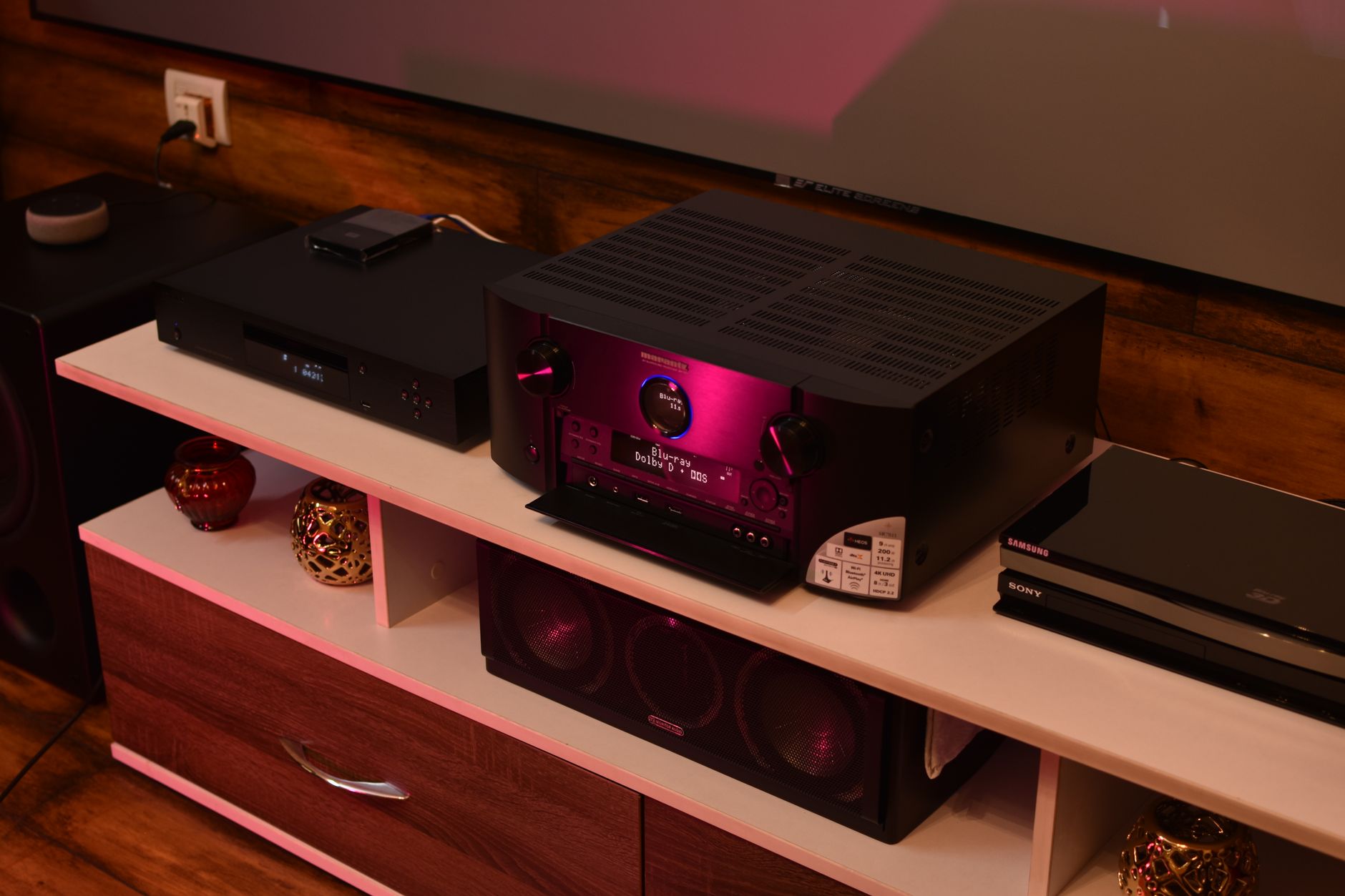
A home theatre system, by contrast, refers to a multi-component audio setup typically consisting of an AV receiver (AVR), multiple discrete speakers (front, center, surround, height), and a subwoofer. This arrangement aims to recreate a cinematic experience with true surround sound, allowing audio engineers to precisely place sounds in a three-dimensional space around the listener. Systems can range from a basic 5.1 (five speakers and one subwoofer) to complex 7.2.4 or higher configurations.
Pros of Home Theatre Systems:
- Superior Immersion: Discrete speakers deliver genuine surround sound and spatial audio (e.g., Dolby Atmos, DTS:X), providing an unparalleled immersive experience.
- Flexibility & Upgradeability: Components can be mixed, matched, and upgraded individually, allowing for customization and future-proofing.
- Power & Dynamics: AV receivers typically offer more power and better sound processing, resulting in a more dynamic and detailed audio presentation.
- Customization: Extensive calibration options allow you to fine-tune the sound to your specific room and preferences.
Cons of Home Theatre Systems:
- Complexity: Setup involves running multiple speaker wires, configuring the AVR, and calibrating the system, which can be daunting for beginners.
- Space Requirements: Multiple speakers and a receiver take up significantly more space.
- Cost: A quality home theatre system, including an AVR and a full speaker set, is generally more expensive than a soundbar.
- Aesthetics: More wires and components can lead to a less minimalist look.
The Core Comparison: Soundbar vs Home Theatre
To illustrate the differences, let’s compare a high-performance soundbar with a popular AV receiver that forms the heart of many modern home theatre setups. For our soundbar representative, we’ll look at the Sonos Arc, a leading choice known for its excellent spatial audio capabilities and seamless integration. For the home theatre system, we’ll consider the Denon AVR-S760H, a highly-regarded 7.2-channel AV receiver that supports the latest audio formats and can power a robust speaker setup.
Comparison Table: Sonos Arc vs. Denon AVR-S760H (with 5.1 Speaker System)
| Feature | Sonos Arc (High-End Soundbar) | Denon AVR-S760H (Core of a 5.1/7.1 Home Theatre System) |
|---|---|---|
| Audio Channels | 5.0.2 (simulated surround with up-firing drivers) | 7.2 (discrete channels, expandable to 7.2.2 with external amp) |
| Spatial Audio Support | Dolby Atmos, Dolby Digital, DTS Digital Surround (via HDMI eARC) | Dolby Atmos, DTS:X, Dolby TrueHD, DTS-HD Master Audio |
| Setup Complexity | Very Simple (HDMI eARC + Power) | Moderate to Complex (multiple speaker wires, AVR configuration, room calibration) |
| Upgradeability | Limited (can add Sonos Sub, Era 100/300 surrounds) | High (speakers, subwoofer, amplifier, media players can be upgraded independently) |
| Connectivity | 1x HDMI eARC, Ethernet, Wi-Fi | 6x HDMI In (3x 8K), 1x HDMI Out (8K), Optical, Coaxial, Analog, USB, Ethernet, Wi-Fi, Bluetooth |
| Physical Footprint | Single bar (1141.7 x 87 x 115.7 mm) | Receiver (434 x 151 x 339 mm) + 5-7 speakers + 1-2 subwoofers |
| Price (System Est.) | High-end for a soundbar (e.g., ~$899 USD for Arc alone) | Mid-range AVR + speakers (e.g., ~$500-700 for AVR + $500-1500+ for speakers) |
| Room Correction | Sonos Trueplay (iOS required) | Audyssey MultEQ (built-in) |
Performance and Experience
Sound Quality and Immersion
The primary battleground between these two categories is sound quality and immersion. The Sonos Arc, according to Sonos’ official specifications, utilizes 11 high-performance drivers, including two up-firing drivers, to deliver a 5.0.2 channel experience that supports Dolby Atmos. In testing by reputable audio review sites like RTINGS.com, the Arc is consistently praised for its impressive virtual surround sound and clear dialogue, especially for a single-bar solution. It creates a surprisingly wide soundstage and a sense of overhead effects, thanks to its psychoacoustic processing and room correction technology.
However, even the best soundbar cannot fully replicate the discrete channel separation and pinpoint accuracy of a true home theatre system. A system built around the Denon AVR-S760H, which features 7.2 channels and supports both Dolby Atmos and DTS:X, provides a fundamentally different experience. With dedicated front, center, surround, and height speakers, sounds are physically placed around the listener, creating a much more convincing and impactful three-dimensional sound field. The ability to calibrate each speaker individually for distance, level, and crossover frequencies (using Audyssey MultEQ on the Denon AVR) allows for a truly optimized sound tailored to your specific room, something a soundbar, even with its own room correction, cannot match.
Connectivity and Features
Connectivity is another area where home theatre systems typically excel. The Sonos Arc offers a minimalist approach with a single HDMI eARC port for TV connection and an Ethernet port for wired network access. It integrates seamlessly into the Sonos ecosystem, allowing for multi-room audio and easy streaming via Wi-Fi. While convenient, this simplicity means fewer direct inputs for other devices.
In contrast, the Denon AVR-S760H is a hub for all your entertainment devices. It boasts six HDMI inputs (three of which support 8K/60Hz and 4K/120Hz pass-through), multiple analog and digital audio inputs, USB, Ethernet, Wi-Fi, and Bluetooth. This allows you to connect gaming consoles, Blu-ray players, streaming boxes, and more directly to the receiver, managing all audio and video signals before sending them to your TV. This level of flexibility is crucial for complex setups or users with many source devices.
Setup and Aesthetics
The ease of setup and aesthetic impact are major differentiators. Setting up the Sonos Arc involves plugging it into power and connecting one HDMI cable to your TV’s eARC port. The Sonos app guides you through the rest, including Trueplay room calibration. It’s designed to be sleek and unobtrusive, blending into most living spaces.
A home theatre system is a different beast. Installing a Denon AVR-S760H and a 5.1 or 7.1 speaker setup requires running speaker wires, positioning speakers for optimal sound, connecting all sources to the AVR, and then performing initial setup and room calibration. This can be time-consuming and may require some DIY effort for cable management. The visual impact is also greater, with multiple speakers and a receiver taking up more physical space, which might not appeal to everyone or fit every room.
Which One Should You Buy?
The choice between a soundbar and a home theatre system ultimately comes down to your priorities:
- Choose a Soundbar (like the Sonos Arc) if:
- You prioritize simplicity, ease of setup, and a minimalist aesthetic.
- Your living space is small, or you want to avoid clutter.
- You primarily want a significant upgrade over TV speakers, especially for dialogue and general TV viewing.
- You’re content with virtual surround sound and don’t need the absolute pinnacle of immersion.
- You value multi-room audio integration (especially with Sonos).
- Choose a Home Theatre System (with an AVR like the Denon AVR-S760H) if:
- You demand the most immersive and authentic cinematic audio experience with true surround sound and spatial audio.
- You have a dedicated room or a larger living space that can accommodate multiple speakers.
- You want maximum flexibility, upgradeability, and extensive connectivity options for various devices.
- You’re willing to invest more time and effort into setup and calibration for optimal performance.
- You prioritize raw power, dynamic range, and precise sound staging.
Our Top Picks
1. Sonos Arc
The Sonos Arc stands out as one of the best premium soundbars on the market. It delivers surprisingly convincing Dolby Atmos effects from a single unit, with clear dialogue and a wide soundstage. Its integration with the Sonos ecosystem makes it a fantastic choice for those already invested in Sonos or looking for an easy-to-use, expandable multi-room audio solution. While it can’t fully replicate discrete surround sound, it gets remarkably close for its form factor and offers an excellent balance of performance and convenience.
Sonos Arc — check today’s price
2. Denon AVR-S760H (as the core of a 5.1/7.1 system)
The Denon AVR-S760H is an outstanding value for building a true home theatre system. This 7.2-channel AV receiver supports the latest audio formats like Dolby Atmos and DTS:X, offers multiple HDMI 2.1 inputs for next-gen gaming, and provides robust power for a range of speakers. Coupled with a quality set of passive speakers (e.g., Klipsch, Polk, ELAC), it forms the foundation for an incredibly immersive and customizable audio experience that will outperform any soundbar in terms of true surround sound and dynamic range. It’s perfect for enthusiasts willing to invest in a component-based setup.
Denon AVR-S760H — check today’s price
Related picks on AliExpress
If you’re looking for more budget-friendly or unique alternatives, AliExpress offers a wide range of soundbars and mini home theatre components. Here are some search phrases to get you started:

Multimedia 6.5 Inch Mini Speaker Home Theatre System Speaker Portable Blue Tooth Speaker
$438.72 $461.81 on AliExpress
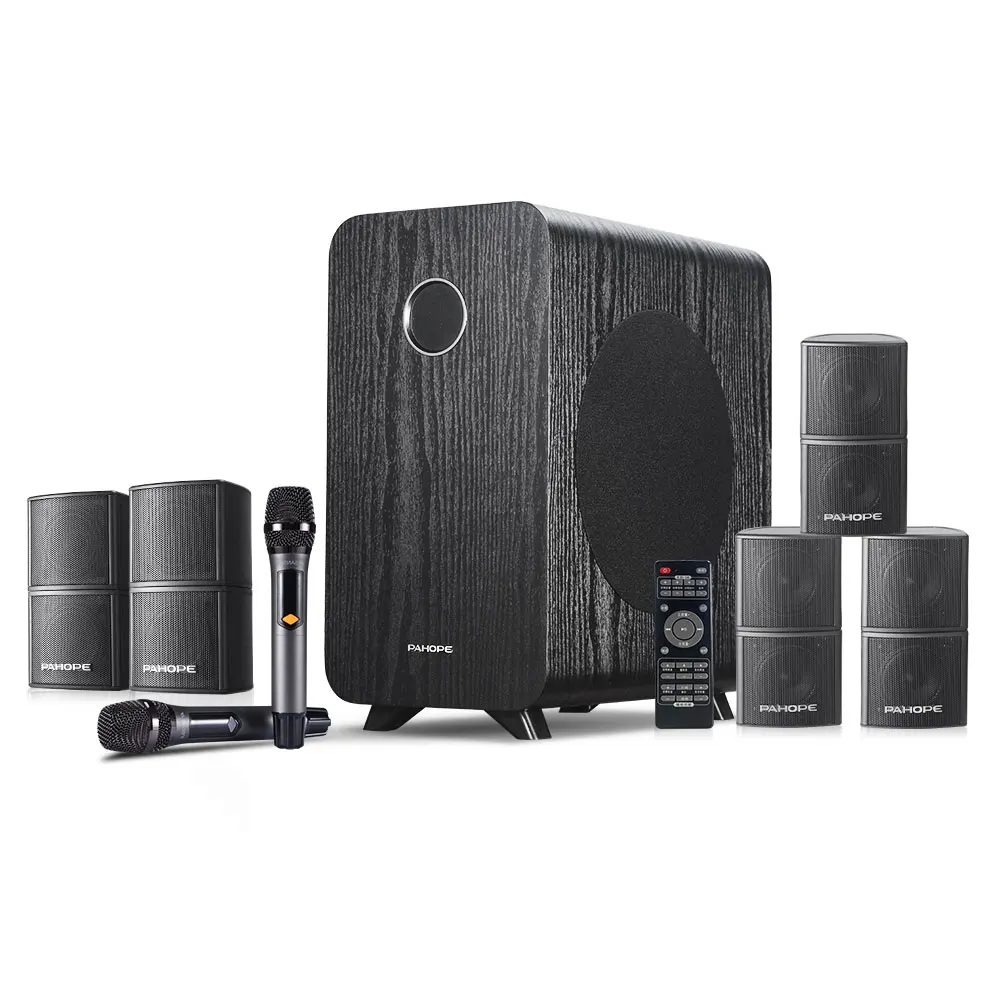
Mini 5.1 Surround Home Theater System With Karaoke USB Wireless Microphone Amplifier Speak
$295.42 $310.97 on AliExpress

Wireless BT Karaoke HIFI Mini Party Speaker Home Theatre Audio Sound System USB Music Play
$174.89 $184.10 on AliExpress
FAQ
Can a soundbar truly replace a home theatre system?
For most casual listeners or those with space constraints, a good soundbar can be a significant upgrade over TV speakers and provide a satisfying audio experience. However, it cannot truly replace the immersive, detailed, and customizable sound of a dedicated home theatre system with discrete speakers. Home theatre systems offer true surround sound, greater dynamic range, and superior channel separation that soundbars, even with virtual processing, cannot fully replicate.
Is Dolby Atmos better on a soundbar or a home theatre system?
Dolby Atmos is generally superior on a home theatre system with dedicated up-firing or in-ceiling height speakers. A soundbar like the Sonos Arc uses up-firing drivers and psychoacoustic processing to reflect sound off the ceiling, creating a sense of overhead effects. While impressive for a single unit, a home theatre system with physically separate height channels provides a more precise, impactful, and convincing three-dimensional audio experience as each sound object has a distinct physical source.
How much should I expect to spend on a good sound system?
The cost varies significantly. A good quality soundbar can range from $200 to $1000+, with premium models like the Sonos Arc often exceeding $800. A decent entry-level home theatre system, including an AV receiver and a 5.1 speaker package, typically starts around $800-$1500 and can easily go into several thousands for higher-end components. It’s crucial to set a budget and prioritize what aspects of audio quality and features are most important to you.
Can I start with a soundbar and upgrade to a home theatre later?
Yes, you can. Many people start with a soundbar for its simplicity and then decide to move to a full home theatre system later. Some soundbars, particularly those from ecosystems like Sonos, allow you to add a subwoofer and wireless rear speakers to create a more robust surround sound experience, bridging the gap somewhat. However, transitioning from a soundbar to a component-based home theatre system usually means replacing the soundbar entirely with an AV receiver and passive speakers, as they are fundamentally different types of systems.
Conclusion
The choice between a soundbar vs home theatre system isn’t about one being inherently ‘better’ than the other, but rather about finding the best fit for your specific needs, space, and budget. If you prioritize simplicity, a clean aesthetic, and a significant audio upgrade without much fuss, a high-quality soundbar like the Sonos Arc is an excellent choice. It delivers impressive performance for its form factor and integrates seamlessly into modern living. However, for the ultimate in immersive audio, true cinematic experiences, and the flexibility to customize and upgrade every component, a dedicated home theatre system built around a capable AV receiver like the Denon AVR-S760H remains unsurpassed. Evaluate your priorities carefully, consider your room dynamics, and decide whether convenience or uncompromised audio performance is your ultimate goal. For more in-depth reviews and comparisons, check out our Handheld Gaming PC vs Laptop: Which Should You Buy for Portable Gaming? other audio system guides.