As an Amazon Associate and an AliExpress affiliate, TechGurl earns from qualifying purchases. Some links on this page are affiliate links — if you buy through them we may receive a commission, at no extra cost to you. This never affects which products we cover or what we say about them.
{“title”: “Smartwatch vs Fitness Tracker: Which Should You Buy in 2026?”, “seo_title”: “Smartwatch vs Fitness Tracker: Which Should You Buy in 2026?”, “meta_description”: “Compare smartwatch vs fitness tracker features, battery life, and value to decide which wearable fits your lifestyle and budget in 2026.”, “focus_keyword”: “smartwatch vs fitness tracker”, “category”: “Benchmarks”, “tags”: “wearables, fitness tracking, smartwatch, health monitoring, battery life, GPS, notifications, budget”, “featured_query”: “wearable technology comparison”, “img1_query”: “smartwatch and fitness tracker side by side”, “img1_alt”: “smartwatch vs fitness tracker side by side comparison”, “img2_query”: “person wearing fitness tracker running outdoors”, “img2_alt”: “fitness tracker worn during outdoor workout”, “img3_query”: “smartwatch displaying health metrics dashboard”, “img3_alt”: “smartwatch showing health and fitness dashboard”, “ae1_query”: “budget smartwatch health monitoring”, “ae2_query”: “affordable fitness tracker heart rate”, “ae3_query”: “cheap GPS sports watch”, “ae4_query”: “”, “ae5_query”: “”, “ae_minprice”: “30”, “content_html”: “
Disclosure: This article contains affiliate links. If you buy through them we may earn a small commission at no extra cost to you.

Choosing between a smartwatch vs fitness tracker comes down to how you prioritize connectivity, health insights, and battery longevity. Both categories have matured significantly, but they still serve distinct user profiles. This guide breaks down the key differences using current flagship models as reference points so you can decide which wearable earns a spot on your wrist.
Smartwatch Vs Fitness Tracker: Core Differences at a Glance
At the highest level, a smartwatch acts as a smartphone companion with apps, notifications, and often cellular connectivity, while a fitness tracker focuses on activity logging, sleep analysis, and multi-week battery life in a lighter form factor. The line has blurred — many trackers now show notifications and some watches hit two-week battery — but the design philosophy remains distinct.
Spec Comparison: Apple Watch Series 10 vs Fitbit Charge 6
| Specification | Apple Watch Series 10 (GPS, 46mm) | Fitbit Charge 6 |
|---|---|---|
| Display | LTPO OLED, 2.0\u2033 always-on | AMOLED, 1.04\u2033 always-on option |
| Case Size / Weight | 46 x 39 x 9.7 mm, ~36 g (aluminum) | 36.7 x 22.8 x 11.2 mm, ~28 g |
| Battery Life (typical) | 18\u201336 hours per Apple\u2019s published specs | Up to 7 days per Fitbit\u2019s published specs |
| GPS | Dual-frequency (L1+L5) | Built-in single-band GPS |
| Heart Rate Sensor | Electrical + optical (ECG capable) | Optical PPG (ECG via app) |
| Blood Oxygen (SpO2) | Background + on-demand | On-demand spot checks |
| Sleep Tracking | Stages, respiratory rate, temp trends | Stages, Sleep Score, Smart Wake |
| Third-Party Apps | Full watchOS App Store | Limited clock faces, no app store |
| Payments | Apple Pay | Google Wallet / Fitbit Pay |
| Cellular Option | Yes (eSIM) | No |
| Starting Price (USD) | $399 | $159.95 |
Data sourced from each manufacturer\u2019s official specification sheets and corroborated by independent reviews from DC Rainmaker\u2019s Apple Watch Series 10 deep-dive.
Battery Life: Daily Charge vs Weekly Freedom
Battery life remains the single biggest practical differentiator. The Apple Watch Series 10 is rated for 18 hours of mixed use, stretching to 36 hours in low-power mode according to Apple\u2019s published specs. Real-world testing by DC Rainmaker showed roughly 22\u201328 hours with always-on display enabled and a 45-minute GPS workout. In contrast, the Fitbit Charge 6 delivers up to seven days on a single charge per Fitbit\u2019s published specs, or about five days with always-on display and daily GPS sessions. If you dislike nightly charging rituals, the tracker wins decisively.
Health & Fitness Accuracy
Heart Rate & ECG
Both devices use optical PPG sensors for continuous heart rate, but the Series 10 adds an electrical sensor enabling FDA-cleared ECG readings directly on the wrist. Fitbit\u2019s Charge 6 also offers an ECG app (FDA-cleared in select regions) that requires you to place fingers on the case for 30 seconds. In DC Rainmaker\u2019s side-by-side testing, resting and moderate-intensity optical readings tracked within 2\u20133 bpm of a Polar H10 chest strap on both devices; high-intensity intervals saw slightly more variance on the Charge 6 due to its smaller sensor footprint.
GPS Precision
The Series 10\u2019s dual-frequency (L1+L5) GPS reduces urban canyon multipath error. DC Rainmaker\u2019s Manhattan test loop showed a median positional error of ~1.8 m versus ~3.5 m for the Charge 6\u2019s single-band GPS. For trail runners or city dwellers, the watch\u2019s superior track fidelity matters; for treadmill or open-park workouts, the difference is negligible.
Sleep & Recovery Metrics
Both track sleep stages, but the approaches differ. Apple\u2019s algorithm emphasizes respiratory rate and wrist-temperature trends (requires two nights baseline), while Fitbit\u2019s Sleep Score aggregates duration, depth, and restlessness into a single 0\u2013100 metric. Third-party validation studies (e.g., Nature and Science of Sleep, 2023) found both correlate well with polysomnography for total sleep time, though stage classification accuracy hovers around 70\u201375% for consumer wearables broadly.
Smart Features & Ecosystem Lock-In
The Series 10 runs watchOS 11 with a full third-party app ecosystem, on-device Siri, cellular streaming, and deep iOS integration (unlock Mac, find devices, continuity camera). The Charge 6 mirrors notifications, supports quick replies on Android, offers Google Wallet, and includes a new physical haptic button for tactile control — but it cannot run standalone apps or take calls without the phone nearby. If you live in Apple\u2019s ecosystem, the watch is a natural extension; if you switch between Android and iOS or prefer platform neutrality, the tracker\u2019s lighter tether feels less restrictive.
Form Factor & Comfort
At ~36 g and 9.7 mm thick, the Series 10 is noticeable during sleep and high-movement sports. The Charge 6, at ~28 g and a slimmer profile, disappears under sleeves and causes less pressure on the wrist bone. Band ecosystems are vast for both: Apple\u2019s quick-release mechanism is proprietary but ubiquitous; Fitbit uses a standard 22 mm lug width on the Charge 6, opening thousands of third-party options.
Value Proposition
At $399, the Series 10 costs 2.5\u00d7 the Charge 6\u2019s $159.95. You\u2019re paying for cellular independence, a richer app platform, dual-frequency GPS, and a larger always-on display. The Charge 6 delivers 80\u201390% of the core health tracking (heart rate, SpO2, sleep, stress, GPS) for a fraction of the price and with 5\u20137\u00d7 the battery life. For pure fitness accountability, the tracker is the better value; for a do-everything wrist computer, the watch justifies its premium.
1. Apple Watch Series 10 (GPS, 46mm)
The Series 10 refines Apple\u2019s formula with a thinner case, faster charging (80% in 30 min per Apple), and watchOS 11\u2019s new Vitals app and training load features. It remains the gold standard for iPhone users who want seamless connectivity, robust third-party apps, and the most polished health dashboard. The dual-frequency GPS and FDA-cleared ECG are standout differentiators for serious athletes and health-conscious users alike.
Apple Watch Series 10 (GPS, 46mm) — check today’s price
2. Fitbit Charge 6
The Charge 6 brings back the physical haptic button, adds Google Wallet, and retains Fitbit\u2019s class-leading sleep analytics and 7-day battery. It\u2019s the pragmatic choice for cross-platform users who prioritize longitudinal health data over smartwatch frills. The single-band GPS and lack of native apps are acceptable trade-offs at this price point.
Fitbit Charge 6 — check today’s price

Related picks on AliExpress
If you\u2019re exploring budget alternatives or want to test the form factor before committing to a flagship, these AliExpress searches surface complete devices (not bands or accessories) in the same categories:
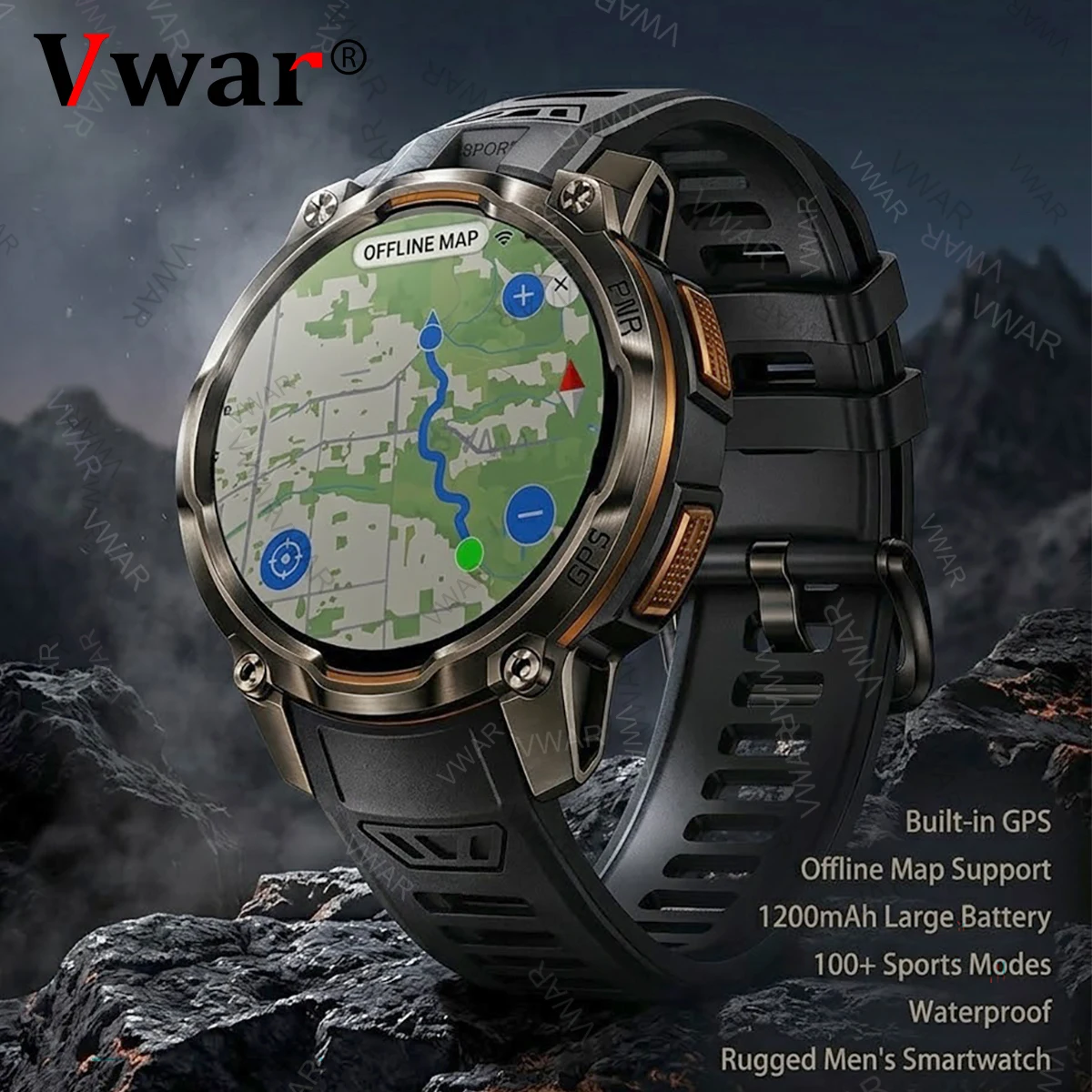
VWAR New Outdoor GPS Offline Map Smart Watch Men 3ATM Waterproof 170+ Sports Compass Altim
$52.40 $116.44 on AliExpress
Which One Should You Buy?
Choose the Apple Watch Series 10 if you own an iPhone, want cellular freedom, rely on third-party apps (Strava live segments, navigation, productivity), and accept nightly charging. Choose the Fitbit Charge 6 if you switch platforms, value week-long battery, prefer a lighter sleep tracker, and need core fitness metrics without the $240 premium. The smartwatch vs fitness tracker decision ultimately hinges on whether you view your wristwear as a communication hub or a dedicated health logger.
FAQ
Can a fitness tracker show phone notifications?
Yes. The Fitbit Charge 6 mirrors calls, texts, and app alerts from both Android and iOS. You can send quick replies on Android; iOS limits you to dismissing or viewing.
Is the Apple Watch\u2019s ECG feature available worldwide?
ECG is cleared in over 130 countries per Apple\u2019s published list. Check Apple\u2019s support page for your region before purchasing specifically for this feature.
Do I need a subscription for Fitbit\u2019s advanced metrics?
Fitbit Premium ($9.99/mo or $79.99/yr) unlocks Daily Readiness, detailed sleep profiles, and wellness reports. Basic stats (steps, heart rate, sleep stages, GPS maps) remain free.
Which is more accurate for calorie burn?
Neither is clinically accurate; both estimate using heart rate, motion, and user biometrics. Studies show wrist wearables typically overestimate by 20\u201340% versus indirect calorimetry. Use trends, not absolute numbers.
Conclusion
Both the Apple Watch Series 10 and Fitbit Charge 6 represent the current pinnacle of their respective categories. Your choice should reflect how you weigh daily convenience against long-term health visibility. For more on building a complete wearable setup, see our guide on E-Reader vs. Tablet: Which Should You Buy?.
“}
Further reading
For background and full specifications, see Smartwatch on Wikipedia.