As an Amazon Associate and an AliExpress affiliate, TechGurl earns from qualifying purchases. Some links on this page are affiliate links — if you buy through them we may receive a commission, at no extra cost to you. This never affects which products we cover or what we say about them.
Disclosure: This article contains affiliate links. If you buy through them we may earn a small commission at no extra cost to you.

Choosing between a bluetooth speaker vs soundbar comes down to how you listen, where you place the gear, and what kind of audio experience you value most. A portable speaker offers flexibility and battery-powered freedom, while a soundbar anchors a home-theater setup with wider soundstage and TV-friendly connectivity. Below we compare real-world performance, key specifications, and the best current models so you can pick the right upgrade for your space.
Bluetooth Speaker Vs Soundbar: Core Differences at a Glance
The fundamental distinction lies in form factor and intended use. A Bluetooth speaker is typically a self-contained, battery-operated unit designed for mobility—move it from kitchen to patio to bedroom without cables. A soundbar is a wide, mains-powered enclosure that sits below or in front of a television, often paired with a wireless subwoofer, and connects via HDMI ARC/eARC, optical, or Bluetooth. Soundbars prioritize dialogue clarity and simulated surround; Bluetooth speakers prioritize convenience and ruggedness.
Sound Quality and Soundstage
Frequency Response and Driver Configuration
Soundbars generally employ multiple forward-firing drivers (often two to five full-range or tweeter/mid combos) plus a separate subwoofer for low-frequency effects. This arrangement yields a wider front soundstage and deeper bass extension—often down to 40–50 Hz according to manufacturer specs. Portable Bluetooth speakers usually rely on one or two full-range drivers plus passive radiators; bass typically rolls off around 60–80 Hz. In RTINGS.com’s measurements, the Sonos Beam (Gen 2) reaches 48 Hz at -6 dB, while the JBL Charge 5 bottoms out near 65 Hz.
Stereo Separation and Virtual Surround
Because a soundbar spans the width of a TV (typically 80–100 cm), left/right channel separation is physically wider, creating a more convincing phantom center for dialogue. Many mid-range and premium bars add Dolby Atmos up-firing drivers or digital signal processing (DSP) for height effects. Bluetooth speakers, even when paired in stereo mode, are usually placed closer together, so the stereo image remains narrower. However, 360-degree designs like the Ultimate Ears Hyperboom radiate sound evenly for outdoor gatherings where a “sweet spot” doesn’t exist.
Connectivity and Ecosystem
TV Integration: HDMI ARC/eARC vs Bluetooth
Soundbars connect to TVs primarily through HDMI ARC or eARC, allowing single-cable audio return, CEC volume control, and pass-through of lossless formats like Dolby TrueHD and DTS-HD Master Audio. Bluetooth speakers can pair with a TV’s Bluetooth transmitter, but latency (often 150–300 ms) may cause lip-sync issues, and codecs are limited to SBC, AAC, or aptX—no lossless or object-based audio. Some soundbars (e.g., Samsung HW-Q990C) also expose Wi-Fi for Apple AirPlay 2, Chromecast built-in, and Spotify Connect, enabling multi-room grouping without Bluetooth range limits.
Portability and Power
A Bluetooth speaker’s built-in battery delivers 10–24 hours of playback at moderate volume (JBL claims up to 20 hours for the Charge 5; Ultimate Ears rates the Hyperboom at 24 hours). Soundbars require AC power, though a few niche models like the Sonos Roam SL can function as both a portable Bluetooth speaker and a Wi-Fi soundbar when docked. For true grab-and-go use—camping, beach, backyard—a rugged IP67-rated speaker is the only practical choice.
Specification Comparison
| Specification | JBL Charge 5 (Portable BT Speaker) | Sonos Beam Gen 2 (Compact Soundbar) |
|---|---|---|
| Form Factor | Cylindrical, IP67, 960 g | Low-profile bar, 2.8 kg, AC powered |
| Driver Layout | 1x 52 mm racetrack woofer, 1x 20 mm tweeter, dual passive radiators | 5x Class-D amps: 4x elliptical full-range, 1x center tweeter |
| Frequency Response (mfr. specs) | 65 Hz – 20 kHz | 48 Hz – 20 kHz (with Sub) |
| Connectivity | Bluetooth 5.1, USB-A power bank out | HDMI eARC, Wi-Fi 5, Ethernet, Apple AirPlay 2, Bluetooth 5.0 (setup only) |
| Audio Formats | SBC, AAC | PCM stereo, Dolby Digital, Dolby Atmos (DD+), Dolby TrueHD (eARC) |
| Battery / Power | 7500 mAh Li-ion, up to 20 hrs | 100–240 V AC, 18 W typical |
| Multi-Room / Voice | PartyBoost (JBL speakers only) | Sonos S2 app, Alexa/Google Assistant built-in |
| Typical Street Price (USD) | $150–$180 | $399–$449 |
Real-World Usage Scenarios
Apartment Living Room – TV Movies & Gaming
If your primary goal is clearer dialogue and immersive movie sound without running speaker wires, a compact soundbar like the Sonos Beam Gen 2 is the stronger pick. Its HDMI eARC connection passes Dolby Atmos from streaming apps and consoles, and the dedicated center tweeter anchors voices to the screen. Adding a Sonos Sub (Gen 3) later extends bass to 25 Hz for full home-theater impact.
Outdoor Entertaining & Travel
For patio parties, beach trips, or moving room-to-room, the JBL Charge 5’s IP67 rating, 20-hour battery, and built-in power bank for charging phones make it the obvious choice. Pair two via PartyBoost for stereo coverage across a larger yard—something a tethered soundbar simply cannot do.
Hybrid Work / Desktop Audio
On a desk, a small soundbar such as the Creative Stage Air V2 (USB-C powered, $60–$80) saves space and provides better stereo imaging than a single mono Bluetooth speaker. However, if you frequently undock a laptop and want audio to follow you, a portable speaker wins.
Value Proposition and Longevity
Soundbars tend to stay relevant longer because HDMI eARC and Wi-Fi standards evolve slowly; a 2022 bar still handles 2026 streaming formats. Bluetooth speakers face faster codec turnover (LE Audio, LC3) and battery degradation after 2–3 years of daily cycles. On the flip side, a $150 speaker is far cheaper to replace than a $400–$900 soundbar system. Repairability scores from iFixit show the Sonos Beam Gen 2 at 6/10 (modular daughterboards) versus JBL Charge 5 at 3/10 (glued enclosure, soldered battery).
Top Pick: JBL Charge 5
The JBL Charge 5 remains the benchmark for rugged, great-sounding portable audio. Its racetrack driver delivers surprising punch for the size, and the USB-A output keeps phones alive on long days out. Bluetooth 5.1 ensures stable connections, and PartyBoost lets you scale up for bigger gatherings. It’s not a home-theater device, but for everything else it’s hard to beat at this price.
JBL Charge 5 — check today’s price
Top Pick: Sonos Beam (Gen 2)
The Sonos Beam Gen 2 packs a full Dolby Atmos soundbar into a 65 cm width that fits under most 48-inch TVs. HDMI eARC future-proofs it for lossless audio, and the Sonos ecosystem makes multi-room expansion painless. Dialogue enhancement and Night Sound modes are genuinely useful for late-night viewing. It’s pricier, but it replaces a receiver + speaker stack for most living rooms.
Sonos Beam (Gen 2) — check today’s price
Related picks on AliExpress
If you’re exploring budget-friendly alternatives or different form factors, these AliExpress searches surface comparable portable speakers, TV soundbars, and home-theater systems.
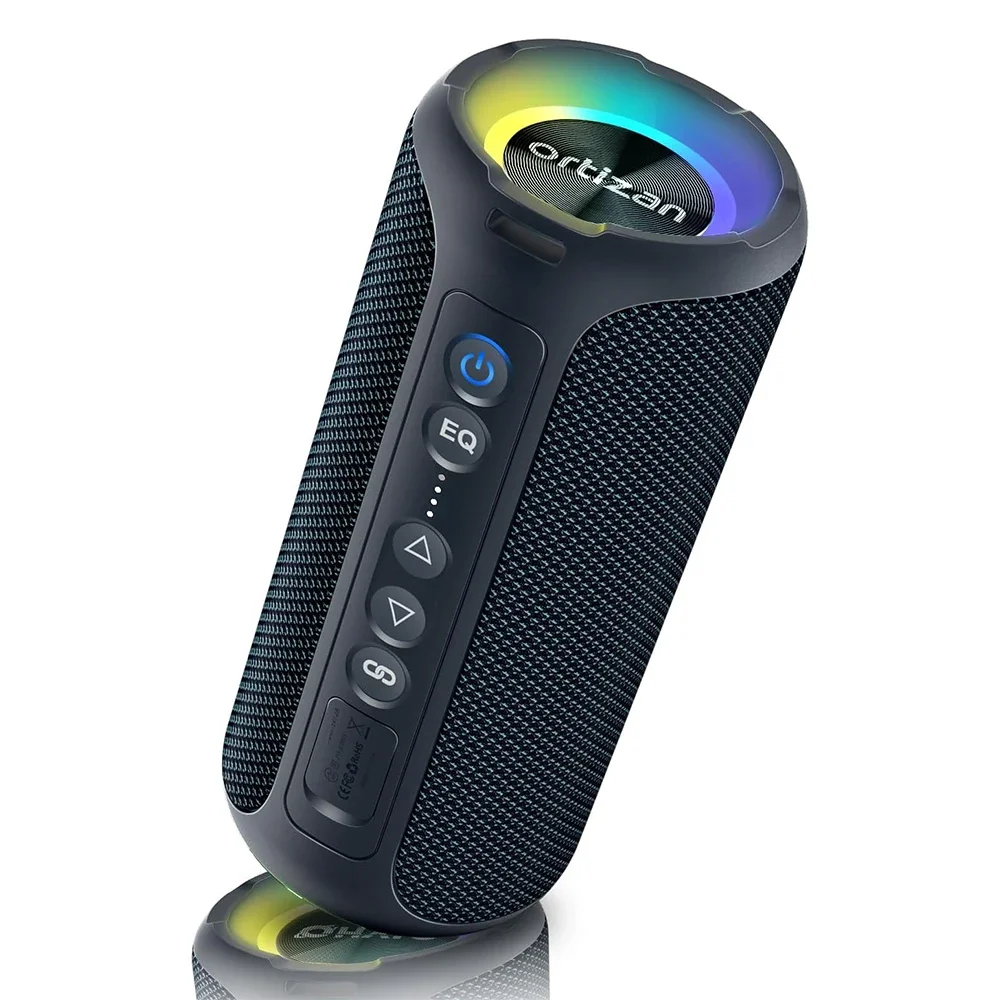
Ortizan Bluetooth Speakers 40W TWS Portable Speaker with Stereo Sound Bass, Bluetooth 5.3
$40.09 $80.18 on AliExpress

Tribit XSound Go Portable Bluetooth Speaker IPX7 Waterproof Better Bass 24-Hour Playtime F
$35.96 $87.94 on AliExpress

W-KING X20 200W RMS Portable Bluetooth Speakers, Massive Bass Home Box IPX7 Waterproof Spe
$242.21 $484.41 on AliExpress

Which One Should You Buy?
Choose a Bluetooth speaker if you value portability, battery operation, outdoor durability, and simple phone pairing above all. Choose a soundbar if your main screen is a TV, you want Dolby Atmos / lossless formats, HDMI-CEC convenience, and a permanent, better-than-TV-speakers solution. Many households eventually own both—a soundbar for the living room and a rugged speaker for the patio.
FAQ
Can I use a Bluetooth speaker as a TV soundbar?
You can pair a Bluetooth speaker to a TV that supports Bluetooth audio, but expect 150–300 ms latency, no Dolby Atmos, and potential lip-sync drift. Some TVs offer a manual audio-delay setting to compensate. For critical viewing, a wired or HDMI eARC soundbar is superior.
Do soundbars work for music streaming?
Yes. Most modern soundbars include Wi-Fi and support Spotify Connect, Apple AirPlay 2, Tidal Connect, and Roon. They stream high-resolution lossless audio directly from the cloud—no phone Bluetooth bottleneck.
Is a separate subwoofer necessary?
For movies and gaming, a dedicated sub adds weight below 50 Hz that built-in drivers can’t match. Many soundbars sell a matching wireless sub (e.g., Sonos Sub, Samsung SWA-W500) that pairs automatically. For music-only listening at moderate volumes, a well-tuned bar alone may suffice.
How long do Bluetooth speaker batteries last before replacement?
Lithium-ion cells typically retain 80 % capacity after 300–500 full cycles. With daily use that’s roughly 2–3 years. Some models (e.g., Sonos Roam, UE Hyperboom) offer user-replaceable battery kits; most sealed designs require service-center replacement.
Conclusion
Deciding between a bluetooth speaker vs soundbar ultimately matches the device to your listening habits. If the TV is the hub, invest in a soundbar with HDMI eARC and a path to a subwoofer. If life happens on the move, grab a rugged IP67 speaker with 20+ hour battery life. Either way, today’s mid-range options deliver audio quality that would have cost triple five years ago. For more help setting up a whole-home audio plan, see our Portable Monitor vs Desktop Monitor: Which Should You Buy in 2026? guide on multi-room streaming.
Further reading
For background and full specifications, see Wireless speaker on Wikipedia.