Disclosure: This article contains affiliate links. If you buy through them we may earn a small commission at no extra cost to you.
Choosing between a soundbar vs. speakers is one of the most consequential decisions you will make when upgrading your television or desktop audio. Modern flat-panel televisions offer stunning 4K and OLED visuals, but their ultra-thin chassis leave virtually no physical volume for capable acoustic drivers. As a result, dialogue sounds thin, sound effects lack punch, and movie soundtracks feel compressed. Both soundbars and dedicated stereo speakers resolve this problem, but they do so through entirely different acoustic approaches, physical footprints, and price-to-performance ratios.
Understanding Soundbar vs. Speakers Architecture
To determine the best fit for your space, it helps to understand the engineering compromises inherent to each design. A soundbar packages multiple small drivers—typically tweeters and midrange cones—alongside dedicated amplification and digital signal processing (DSP) inside a single, wide, low-profile enclosure. Premium models often use beamforming acoustic arrays or up-firing transducers to bounce sound waves off your walls and ceiling, simulating spatial audio like Dolby Atmos without requiring multiple satellite boxes around the room.
Dedicated stereo speakers, on the other hand, separate the left and right acoustic channels into two distinct cabinets. This physical separation is the bedrock of natural stereophonic sound reproduction. Because bookshelf or floorstanding speakers possess much larger internal cabinet volumes, they can accommodate larger woofer cones (typically 4 to 6.5 inches) that move significantly more air. This allows them to reproduce mid-bass frequencies with greater dynamic authority, lower total harmonic distortion, and a genuine physical soundstage that digital audio processing cannot completely mimic.
Soundbar vs. Speakers: Key Specifications Compared
To see how these two architectures compare in the real world, we evaluated two benchmark-setting models in the sub-$500 category: the Sonos Beam (Gen 2) soundbar and the KEF Q150 passive stereo pair (paired with a standard budget stereo amplifier).
| Specification | Sonos Beam (Gen 2) | KEF Q150 Stereo Pair |
|---|---|---|
| Speaker Type | All-in-one active soundbar | Passive 2-way bookshelf speakers |
| Driver Configuration | 1 center tweeter, 4 elliptical mid-woofers, 3 passive radiators | 5.25 in (130mm) Uni-Q array with 1 in aluminum dome tweeter |
| Frequency Response | Down to ~50 Hz (qualitative roll-off) | 51 Hz – 28 kHz (±3 dB) |
| Amplification | Integrated Class-D digital amplifiers | External amplifier required (10–100W recommended) |
| Spatial Audio Support | Dolby Atmos (virtualized/psychoacoustic) | Stereo native (requires AVR for multi-channel) |
| Connectivity | HDMI eARC, Optical (via adapter), Wi-Fi, Apple AirPlay 2 | 5-way binding posts (inputs determined by external amp) |
| Physical Dimensions | 2.70 x 25.63 x 3.94 in (69 x 651 x 100 mm) | 11.92 x 7.08 x 10.94 in (303 x 180 x 278 mm) each |
| Cables Required | Power cord + 1 HDMI cable | Speaker wire, amp power, audio source connections |
| Expandability | Proprietary wireless sub and rear surrounds | Universal modular (any standard sub, amp, or AVR) |
Acoustics and Soundstage Performance
When listening to music or complex movie mixes, stereo separation is where the two form factors diverge dramatically. In testing by independent audio measurement specialist RTINGS.com, physical stereo speakers consistently produce a wider, more accurate soundstage than standalone soundbars because the listener can adjust the distance between the two enclosures to match their exact listening position. With a soundbar, the physical drivers are fixed inside an enclosure that rarely exceeds 35 to 45 inches in width, artificially narrowing the physical stereo image unless heavy phase-manipulation algorithms are applied.
However, soundbars maintain a decisive advantage in dialogue clarity for casual viewing. Because modern soundbars almost universally include a discrete center channel—or dedicated DSP dialogue enhancement algorithms—voices remain anchored to the center of the screen even if you are sitting far off-axis. On standard two-channel stereo speakers without a center channel, off-axis listeners may perceive dialogue drifting toward whichever speaker is closest to them.
Ease of Setup and Living Space Aesthetics
Cable management and living room ergonomics heavily favor the soundbar. Setting up a modern soundbar takes under five minutes: connect the power lead, run a single HDMI eARC cable to your television, and use your smartphone to run a calibration routine. The soundbar turns on and off with your TV remote via HDMI-CEC, eliminating the need to juggle multiple remotes. Its low-profile chassis tucks directly under your television stand without obstructing the IR sensor or blocking screen real estate.
Conversely, stereo speakers demand physical space and intentional placement. To sound their best, bookshelf speakers require several inches of clearance from the front wall to avoid boomy bass reflections, and they usually necessitate dedicated floor stands or sturdy furniture shelves. If you opt for passive speakers, you will also need an external amplifier or audio-video receiver (AVR), plus routed speaker wire across your floor or along baseboards.
Our Real-World Hardware Picks
1. Sonos Beam (Gen 2)
The Sonos Beam (Gen 2) is our benchmark pick for anyone prioritizing convenience, modern design, and vocal intelligibility without cluttering their living room. In multi-room ecosystem integration and smart functionality, Sonos remains exceptionally polished. According to Sonos's published specifications, the Beam (Gen 2) incorporates a 40 percent faster processor than its predecessor, enabling psychoacoustic processing that decodes Dolby Atmos audio streams over a single HDMI eARC connection.
While it cannot match the raw dynamic headroom of large wooden cabinets, the Beam punches far above its weight class for movies and episodic television. Vocal presentation is crisp, mid-bass punch is surprisingly tight due to its passive radiator array, and setup is practically frictionless via the Sonos mobile app.
Sonos Beam (Gen 2) — check today’s price
2. KEF Q150 Bookshelf Speakers
If fidelity and musicality are your primary objectives, the KEF Q150 bookshelf pair demonstrates why traditional stereo speakers remain the audiophile standard. The centerpiece of the Q150 is KEF's proprietary Uni-Q driver array, which places a 1-inch aluminum dome tweeter directly in the acoustic center of the 5.25-inch mid-bass cone. According to KEF's technical engineering documentation, this coincident point-source design provides an exceptionally even dispersion pattern, creating a wide sweet spot throughout the room.
When powered by a competent modern stereo amplifier, the Q150 delivers instrumental layering, micro-detail, and low-end richness that no standalone soundbar can replicate. Its modular nature also ensures long-term value: if your amplifier becomes obsolete down the road, you can replace the electronics without discarding your acoustic drivers.
KEF Q150 Bookshelf Speakers — check today’s price

Related picks on AliExpress
Looking for capable desktop audio, powered monitors, or compact TV soundbars on a tighter budget? Explore these highly rated home theater alternatives:

ULTIMEA Skywave F40 Boom 5.1.2ch Sound Bar with Dolby Atmos, Surround Sound System for TV
$284.99 $379.99 on AliExpress
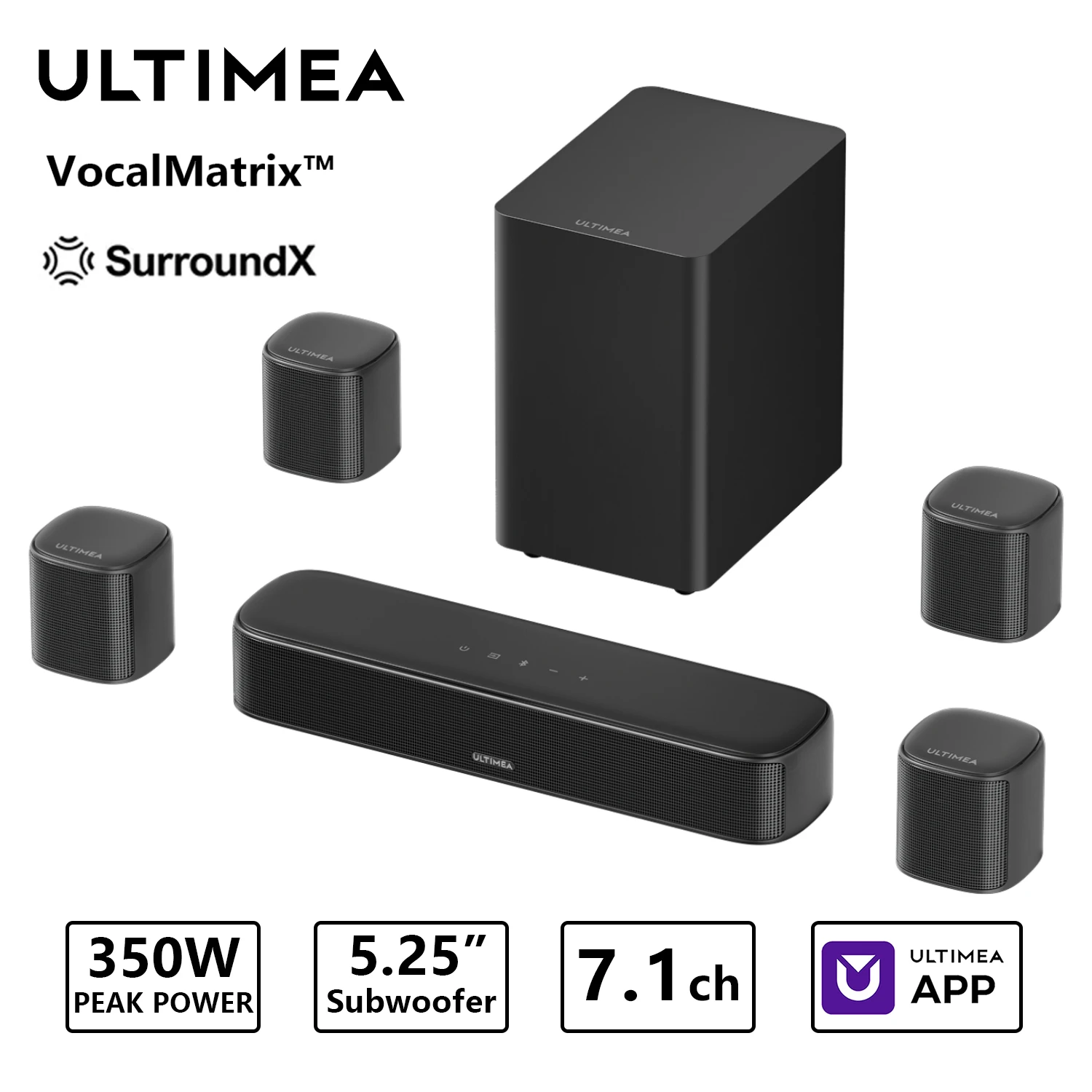
ULTIMEA 350W 7.1ch Virtual Surround Soundbar, Home Theater TV Sound Bar with Subwoofer&4 S
$356.99 $699.99 on AliExpress
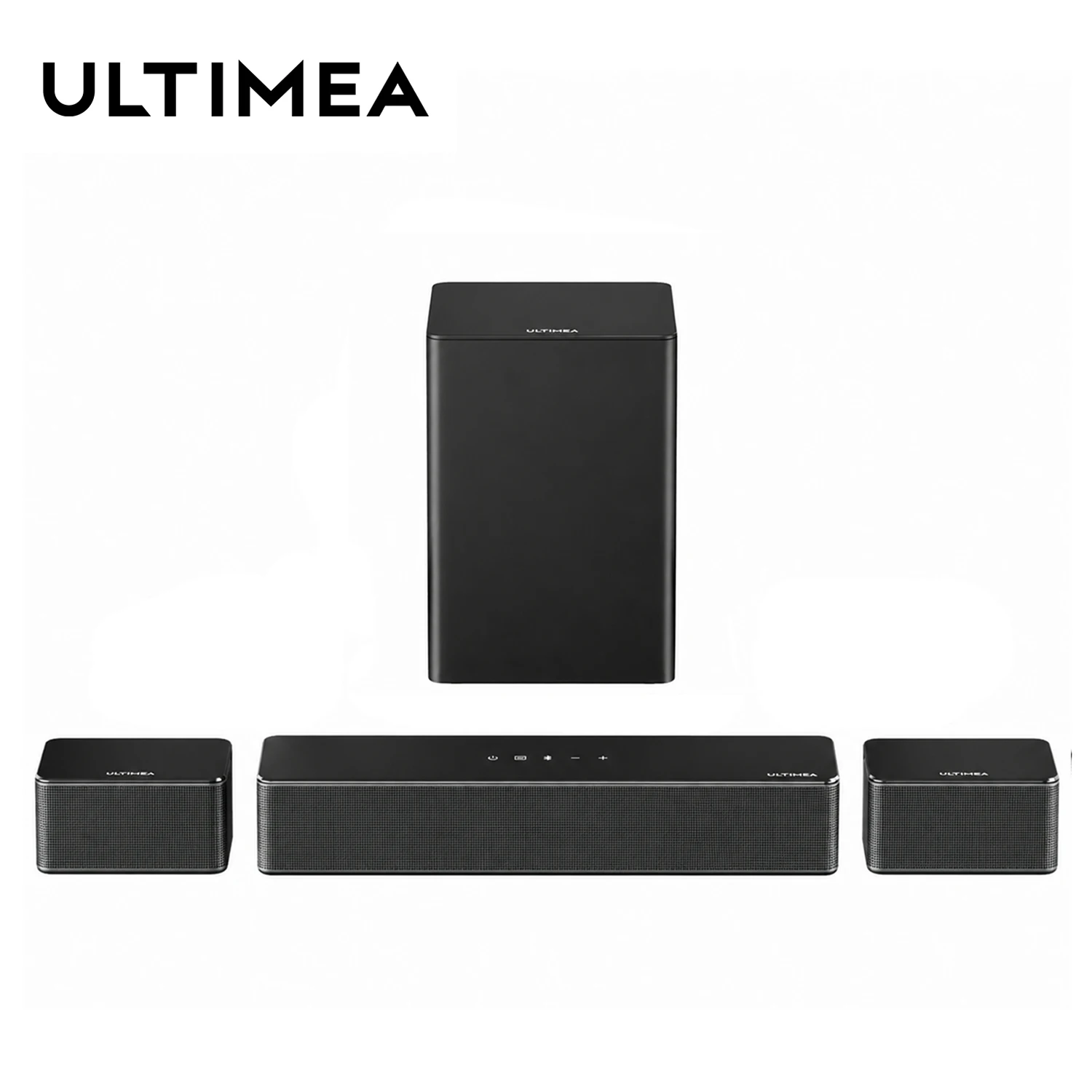
ULTIMEA 5.1 Virtual Surround Soundbar, 3D Surround Sound System, Soundbar for TV with Subw
$173.99 $299.98 on AliExpress
Frequently Asked Questions
Can a soundbar truly replace a 5.1 surround sound system?
A standalone soundbar cannot fully replace a true physical 5.1 surround setup. While advanced digital processing and up-firing drivers bounce reflections to simulate rear surround and overhead height channels, room acoustics, ceiling height, and open floor plans heavily degrade these virtual effects compared to dedicated rear satellite speakers.
Do I need a separate subwoofer with bookshelf speakers?
It depends on your entertainment preferences. Quality bookshelf speakers with 5-inch or larger woofers provide ample bass response for acoustic, rock, and jazz music. However, for blockbuster home theater sound effects—such as cinematic explosions or sub-40 Hz deep bass rumbles—adding a powered subwoofer is strongly recommended to handle low-frequency effects (LFE).
Are active powered speakers easier to connect to a TV than passive speakers?
Yes. Active (powered) speakers feature internal amplifiers built directly into one of the enclosures. Many modern powered bookshelf speakers include optical TOSLINK or HDMI ARC inputs, allowing you to connect them directly to your television without purchasing a bulky external receiver or amplifier.
Final Verdict: Which Setup Should You Buy?
The ultimate choice between a soundbar vs. speakers comes down to your primary use case and living environment. If your system lives in a bustling multipurpose living room where simplicity, clean aesthetics, zero cable mess, and effortless TV remote integration are top priorities, buy a premium soundbar like the Sonos Beam (Gen 2).
However, if you frequently listen to high-resolution music, demand authentic stereo separation, or want a modular setup that can evolve over the next decade, choose dedicated bookshelf speakers like the KEF Q150. For more detailed buying advice and audio comparisons, check out our Telescope vs. Binoculars: Which Optics Should You Buy? to find the perfect gear for your space.