As an Amazon Associate and an AliExpress affiliate, TechGurl earns from qualifying purchases. Some links on this page are affiliate links — if you buy through them we may receive a commission, at no extra cost to you. This never affects which products we cover or what we say about them.
Disclosure: This article contains affiliate links. If you buy through them we may earn a small commission at no extra cost to you.
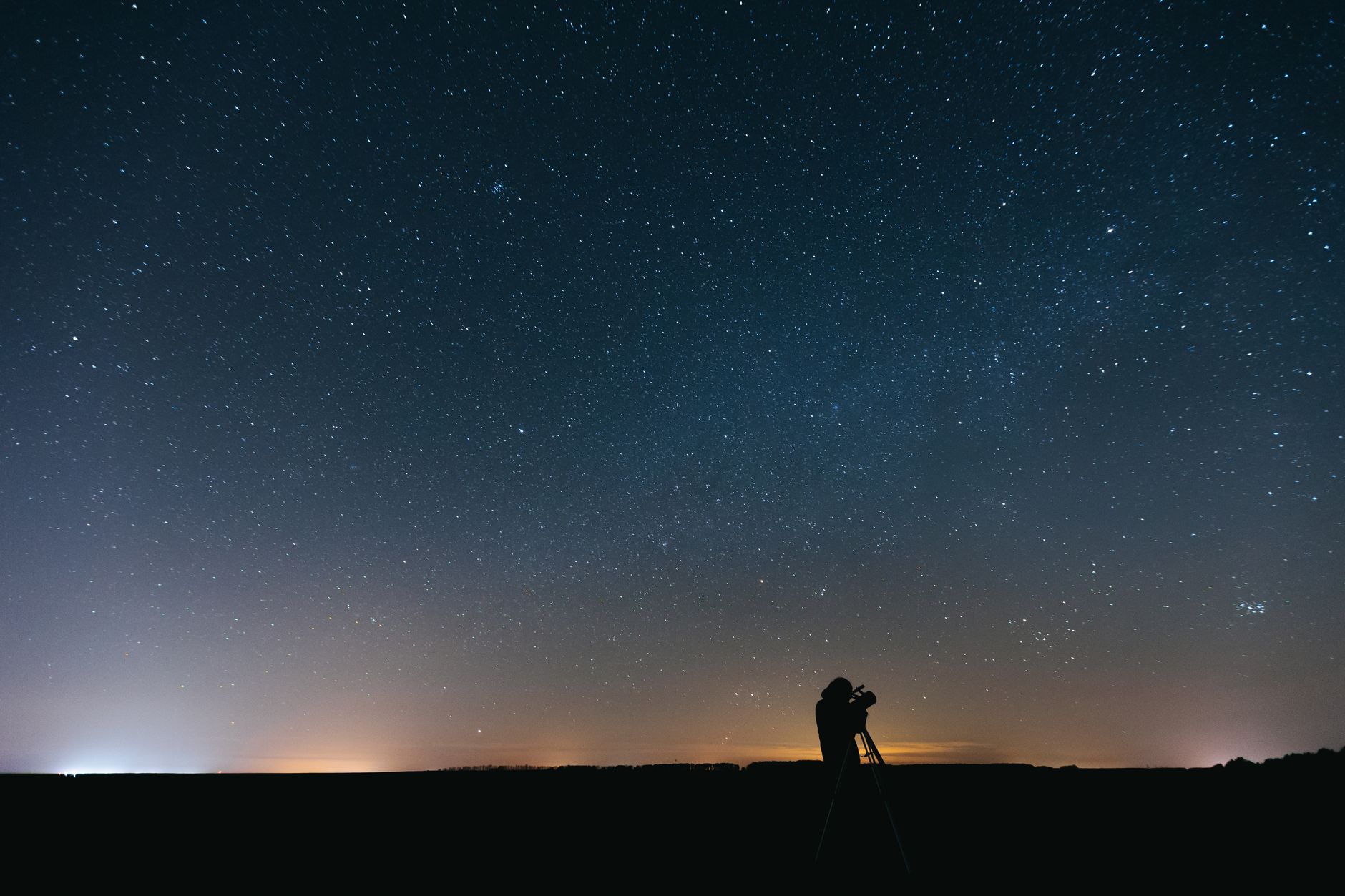
Choosing between a telescope vs binoculars is the first major crossroads every budding astronomer encounters when looking to explore the cosmos. While both instruments magnify distant celestial targets, they accomplish this in fundamentally different ways. Binoculars provide wide-field, intuitive stereo views that let you sweep across expansive star fields, whereas telescopes prioritize raw focal length and light collection to bring faint deep-sky targets and planetary details into sharp focus.
Many beginners rush into buying massive visual scopes under the assumption that bigger always equals better, only to find the complex alignment and bulky tripods discouraging. Others pick up compact birdwatching binoculars expecting to see Saturn’s rings, only to be met with tiny points of light. Understanding the functional differences in optical architecture, magnification constraints, light grasp, and portability will ensure you spend your money on an optic you actually use under the night sky.
Telescope vs Binoculars: Key Architectural Differences
The core distinction in the telescope vs binoculars debate boils down to optical design and observational intent. Binoculars are essentially two matched refractor telescopes joined together by a central bridge with prism assemblies inside. This layout allows for binocular vision, preserving your brain’s natural stereoscopic processing. While astronomical targets are too far away for true depth perception, viewing with both eyes drastically reduces visual fatigue and improves perceived contrast.
Telescopes, by contrast, use a single optical tube assembly (OTA)—either glass lenses (refractors), curved mirrors (reflectors), or a combination of both (catadioptrics). By channeling all incoming photons into a single eyepiece, a telescope maximizes focal length and aperture diameter. This allows astronomers to swap modular eyepieces, adjust focal ratios, and achieve magnifications far beyond what handheld optics can support.
Optical Performance and Specifications Comparison
To highlight the practical differences between these two optical formats, we compare two benchmark astronomy instruments: the Celestron SkyMaster 15×70 astronomy binoculars and the computerized Celestron NexStar 4SE Maksutov-Cassegrain telescope.
| Specification | Celestron SkyMaster 15×70 (Binoculars) | Celestron NexStar 4SE (Telescope) |
|---|---|---|
| Optical Design | Porro Prism (BaK-4) | Maksutov-Cassegrain |
| Aperture Diameter | 70 mm (2.75 in) per barrel | 102 mm (4.01 in) |
| Focal Length | Fixed internal optical path | 1325 mm |
| Magnification | 15x (Fixed) | 53x (with included 25mm eyepiece; up to 241x theoretical) |
| Angular Field of View | 4.4 degrees | 0.63 degrees (with standard 25mm eyepiece) |
| Mounting Requirement | Handheld capable (Tripod recommended) | Motorized Alt-Az GoTo mount with steel tripod (Included) |
| Total Weight | Approx. 3.0 lbs (1.36 kg) | Approx. 21 lbs (9.5 kg) total with mount |
| Primary Astronomical Targets | Milky Way sweeping, open clusters, bright comets, Andromeda Galaxy | Lunar craters, Jupiter’s cloud belts, Saturn’s rings, compact nebulae |
Field of View vs. Raw Magnification
Field of view represents one of the most critical compromises between optical designs. The Celestron SkyMaster 15×70 offers a generous 4.4-degree true field of view according to Celestron’s official product specifications. In practical terms, this allows you to fit the entire Pleiades star cluster (M45) or the sweeping core of the Andromeda Galaxy (M31) into a single panoramic frame without edge clipping.
In contrast, high-focal-length scopes like the NexStar 4SE narrow your true field of view down below 1 degree. While this tight framing is restrictive for expansive star clouds, it provides the angular resolution required to resolve the Cassini Division in Saturn’s rings or split challenging double stars like the Double-Double in Lyra.
Portability, Setup Speed, and Workflow
The best optical instrument is always the one you actually take outside. Binoculars excel at spontaneous observing sessions. Because they require zero thermal acclimation, battery power, or star alignment routines, you can step into your backyard and be viewing Messier objects within thirty seconds.
A telescope setup involves mechanical trade-offs. Even compact catadioptrics like the NexStar series require leveling the tripod, powering the motorized drive, and completing a multi-star sky alignment. Reflector and compound designs also require thermal equilibrium—the mirrors must cool down to ambient outdoor temperature to prevent internal tube currents from blurring the image.
Top Recommended Options
If you have decided which optical path suits your observing style, these two industry-standard picks offer stellar optical clarity and proven mechanical reliability.
1. Celestron SkyMaster 15×70
The Celestron SkyMaster 15×70 is widely regarded as the gold standard for budget-conscious astronomical binocular viewing. With dual 70mm objective lenses utilizing multi-coated optics and high-density BaK-4 Porro prisms, this model captures ample light while retaining manageable handheld dimensions. It excels at wide-field surveys of rich star clouds in Cygnus and Sagittarius, bringing deep-sky gems to life with two-eyed immersion.
While lightweight enough for short observational bursts, pairing the SkyMaster with a standard photographic tripod via its included adapter bracket unlocks rock-steady views of lunar maria and Jupiter’s four Galilean moons.
Celestron SkyMaster 15×70 — check today’s price
2. Celestron NexStar 4SE
For observers seeking high-resolution planetary views and automated celestial tracking, the Celestron NexStar 4SE is an exceptional starter compound telescope. Its 102mm Maksutov-Cassegrain optical system packs a massive 1325mm focal length into an ultra-portable tube assembly, virtually eliminating chromatic aberration while delivering crisp, high-contrast planetary detail.
Equipped with Celestron’s proprietary SkyAlign technology and a computerized database of over 40,000 celestial objects, the NexStar 4SE automatically slews to and tracks planets, planetary nebulae, and binary star systems throughout the night.
Celestron NexStar 4SE — check today’s price
Related picks on AliExpress
For stargazers looking for competitive values on entry-level astronomical optics, several quality visual packages and spotting gear are available directly from international retailers:

Professional Astronomical Telescope F30070 Monocular 150 Times Zoom HD Night Vision View
$56.48 $120.90 on AliExpress

GEMINI Astro EAF Electric auto focusing for deep space photography of astronomical telesco
$61.28 $87.52 on AliExpress
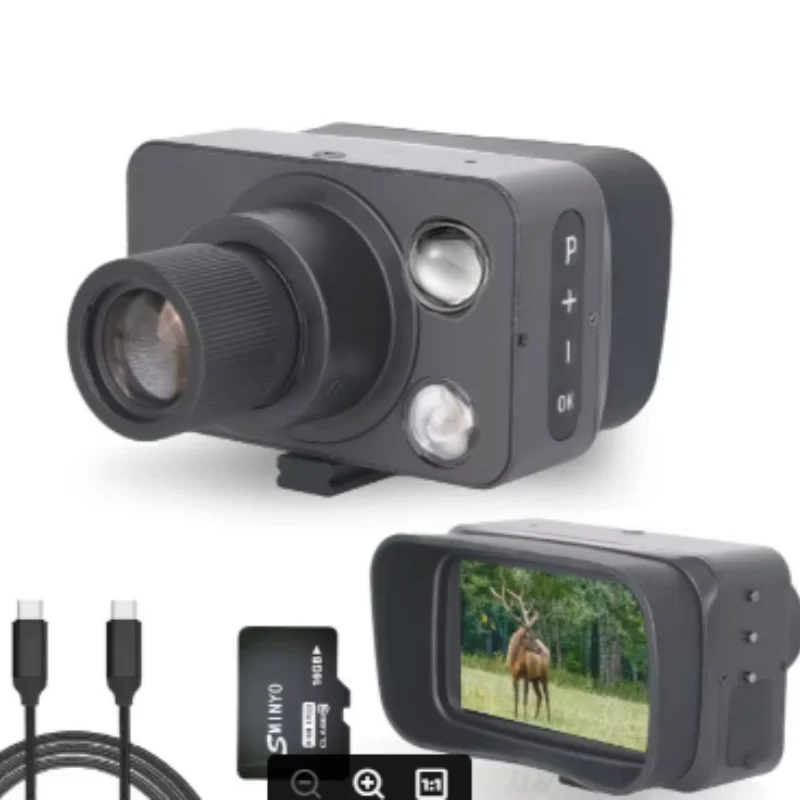
Spotting Telescope Powerful Magnification Long Range Camping Astronomical Telescope For Bi
$94.45 $174.90 on AliExpress

Which One Should You Buy?
When evaluating a telescope vs binoculars purchase, let your primary targets and lifestyle dictate your selection:
- Buy Binoculars if: You want an affordable, ultra-portable grab-and-go instrument for casual sky scanning, nature watching, camping trips, and expansive open star clusters.
- Buy a Telescope if: Your primary goals are high-magnification planetary observation, revealing fine detail in lunar craters, or tracking faint deep-sky targets across the night sky.
Frequently Asked Questions
Can you see planets with binoculars?
Yes, but with limitations. Through 10×50 or 15×70 binoculars, Jupiter appears as a distinct bright disk accompanied by its four Galilean moons (Io, Europa, Ganymede, and Callisto). Saturn appears as an elongated oval, though resolving the gap between the rings and planet requires a telescope running at roughly 30x to 50x magnification or higher.
Do I need a tripod for astronomy binoculars?
For binoculars with magnifications of 7x to 10x, handheld viewing is comfortable for most users. However, for 15x or 20x models—such as 15×70 or 20×80 binoculars—even tiny hand tremors cause stars to shake violently. A tripod or monopod is strongly recommended for sustained, high-magnification binocular viewing.
Why are images upside down in an astronomy telescope?
Astronomical telescopes use optical layouts optimized for maximum light transmission and contrast. Correcting the orientation requires extra lenses or prisms that introduce light loss and optical reflections. In the vacuum of space, there is no true top or bottom, so astronomers prefer the brightest possible image over an upright orientation.
Conclusion
In the classic debate of telescope vs binoculars, neither instrument is universally superior; rather, they serve complementary roles in visual astronomy. Binoculars provide unmatched situational context and effortless wide-field scanning, making them the ultimate entry point for learning constellations and discovering bright Messier objects. Conversely, a telescope unlocks the high-magnification resolution needed to study planetary atmospheres and intricate lunar topographies. Exploring our curated E-Reader vs. Tablet: Which Should You Buy? guides will help you discover additional astronomy accessories and optical gear tailored to your night sky adventures.