As an Amazon Associate and an AliExpress affiliate, TechGurl earns from qualifying purchases. Some links on this page are affiliate links — if you buy through them we may receive a commission, at no extra cost to you. This never affects which products we cover or what we say about them.
Disclosure: This article contains affiliate links. If you buy through them we may earn a small commission at no extra cost to you.
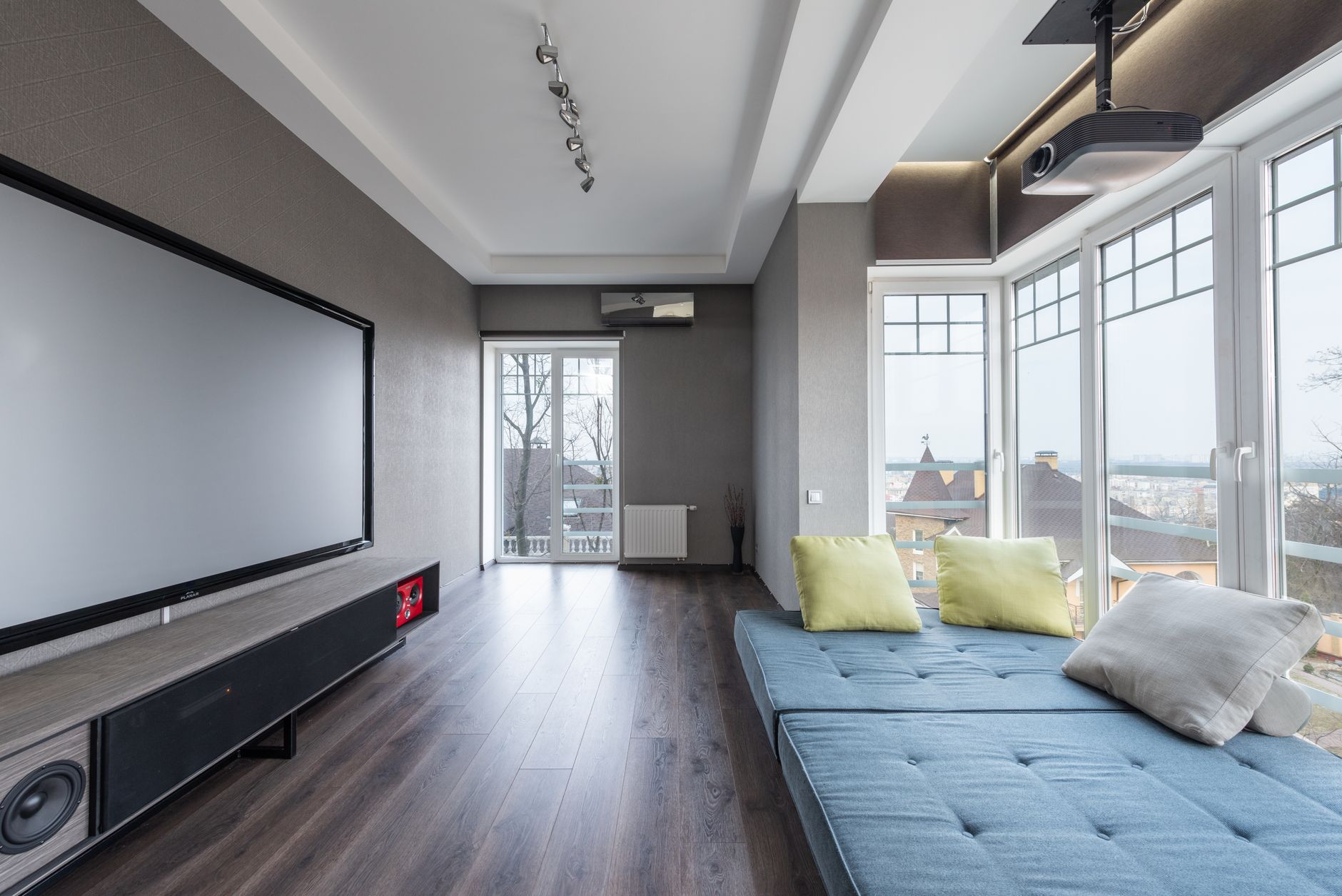
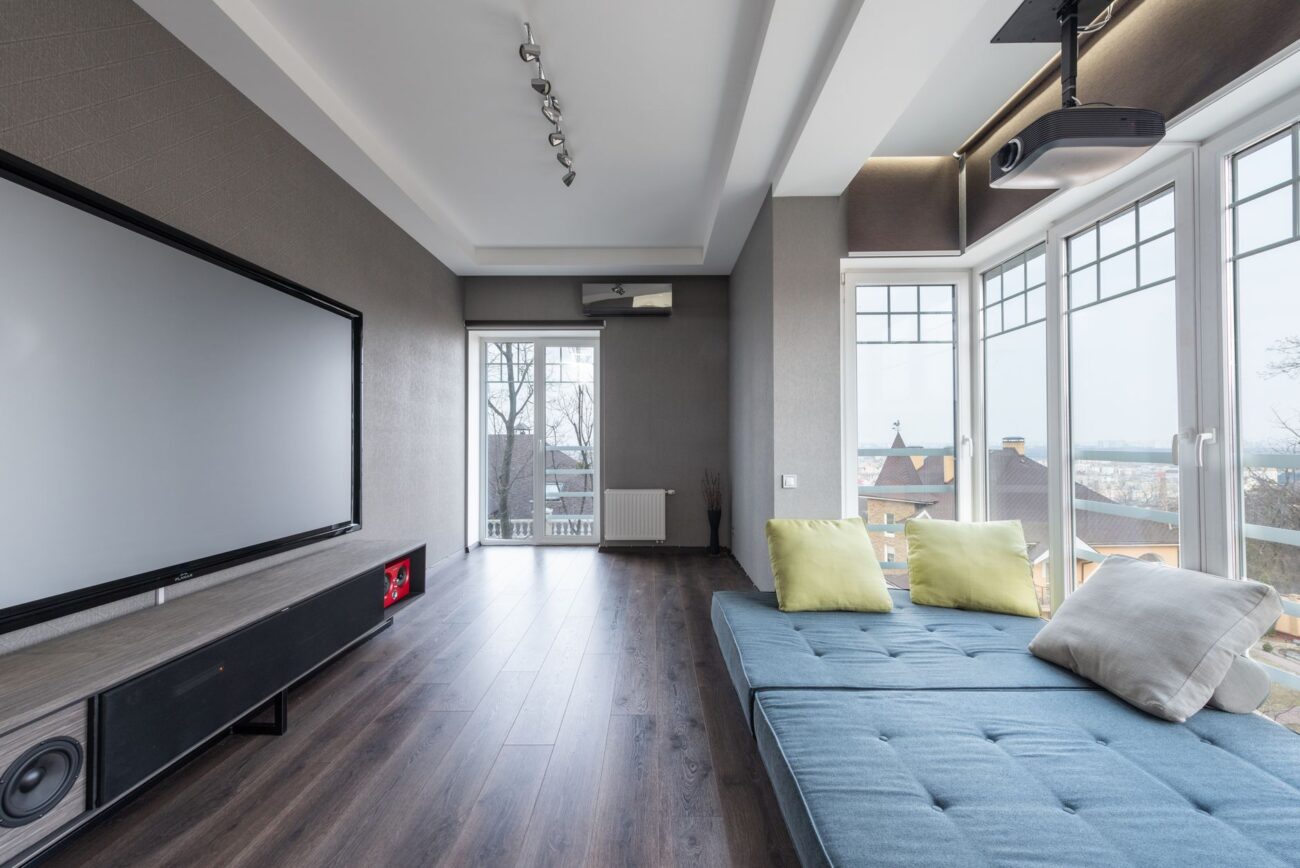
Deciding between a projector vs tv setup is one of the most consequential decisions you will make when planning a living room or dedicated media space. While modern television sets have steadily expanded in diagonal dimensions without sending retail prices into the stratosphere, modern ultra-short-throw (UST) and long-throw laser projectors have simultaneously evolved to bring genuine commercial-grade cinematic scale straight into residential homes. Each technology offers undeniable strengths, but their trade-offs in contrast, ambient light handling, input latency, and spatial requirements remain stark.
To deliver a fair and pragmatic real-world comparison, we examine two pinnacle devices representative of their respective form factors: the Formovie Theater 4K UST Laser Projector and the LG C3 77-Inch OLED 4K TV. Both targets sit in roughly comparable enthusiast price territory, giving consumers a direct choice between overwhelming screen scale and reference-grade pixel fidelity.
Projector vs TV: Key Specifications Compared
Display physics dictate how these two hardware categories render images. An OLED television emits light per subpixel directly toward the viewer, yielding perfect black levels. A projector, conversely, beams light onto a reflective screen surface or wall, where the perceived image quality depends heavily on ambient light conditions and screen material.
| Specification | Formovie Theater 4K UST Projector | LG C3 77-Inch OLED TV |
|---|---|---|
| Display Technology | Triple Laser ALPD 4.0 (DLP with XPR Pixel Shift) | Self-Emissive WOLED |
| Native / Display Resolution | 3840 x 2160 (Pixel Shifted) | 3840 x 2160 (Native 4K) |
| Screen Diagonal Range | 80 inches to 150 inches | 77 inches (fixed) |
| Claimed Peak Brightness | 2,800 ANSI Lumens (Manufacturer spec) | ~800 nits peak window (RTINGS measured) |
| Native Contrast Ratio | 3,000:1 FOFO (Manufacturer published spec) | Infinite:1 (True Per-Pixel Black) |
| Refresh Rate & Motion | 60Hz | 120Hz native (Variable Refresh Rate / G-Sync) |
| HDR Support | Dolby Vision, HDR10+, HDR10, HLG | Dolby Vision, HDR10, HLG |
| Input Lag (Game Mode) | ~34ms at 4K 60Hz (Manufacturer spec) | ~5.5ms at 4K 120Hz / ~10.5ms at 4K 60Hz |
| Light Source Lifespan | 25,000 hours (Laser engine) | 100,000 hours (Panel design estimate) |
| Ambient Light Immunity | Low to Moderate (requires ALR screen) | High (Glossy anti-reflective coating) |
Image Quality, Brightness, and Contrast Dynamics
Contrast is widely acknowledged by display engineers as the primary component of perceived picture quality. In this arena, the OLED panel commands an insurmountable technical advantage. According to comprehensive contrast and brightness measurements conducted by RTINGS, the LG C3 achieves an infinite native contrast ratio because its individual organic pixels turn completely off to display true pitch black. In a pitch-black room, watching high-contrast scenes on an OLED produces zero blooming, zero light bleed, and pinpoint highlight precision.
Projectors, by their physical nature, cannot project the color black; they simply project an absence of light onto a surface. The Formovie Theater utilizes an ALPD 4.0 triple-laser light engine that produces an impressive 3,000:1 native contrast ratio according to Formovie published specifications, which is exceptional for a DLP projector. However, in an unconditioned living room with daylight streaming through windows, that contrast collapses unless paired with a specialized Ambient Light Rejecting (ALR) optical screen. While the Formovie’s 2,800 ANSI lumens can overpower minor ambient illumination, it cannot duplicate the razor-sharp punch and localized specular highlights of a self-emissive television.
Screen Real Estate: The Factor of Immersion
Where the projector wipes away all competition is sheer physical presence. Even a mammoth 77-inch or 83-inch television feels diminutive when positioned alongside a 120-inch or 150-inch projection display. From standard viewing distances between 10 and 12 feet, a 120-inch screen delivers an immersive 45-degree field of view that matches commercial movie theaters, turning an ordinary movie night into a genuine cinematic event.
Achieving a 100-inch or larger picture with an ultra-short-throw projector requires only inches of clearance from the front wall. By contrast, a 98-inch or 100-inch traditional television weighs well over 100 pounds, requires heavy-duty wall anchors or a massive console, and presents difficult logistical challenges merely navigating narrow stairwells or doorways during delivery.
Gaming and Everyday Usability
If competitive gaming or all-day casual viewing occupies a major slice of your entertainment habits, the balance tips firmly back toward television hardware. Modern flagship screens like the LG C3 support four full-bandwidth HDMI 2.1 ports capable of 4K at 120Hz with variable refresh rates (VRR), AMD FreeSync Premium, and Nvidia G-Sync compatibility. With input lag clocking in under 10 milliseconds, gaming responsiveness is instantaneous.
Most home cinema projectors, including the Formovie Theater, remain capped at 60Hz playback with input lag hovering around 34 to 40 milliseconds. While perfectly acceptable for story-driven single-player adventures like The Witcher 3 or casual simulation games, fast-paced first-person shooters reveal sluggish mouse and thumbstick input. Furthermore, modern televisions require zero warmup, handle static user interfaces without mechanical fan noise, and consume significantly less electricity over extended operational hours.
Two Top Display Solutions for Your Space
1. Formovie Theater 4K Laser Projector
The Formovie Theater remains one of the most compelling ultra-short-throw projectors on the market today. Featuring a native triple-laser ALPD 4.0 RGB light source, it covers an astounding 107% of the ultra-wide BT.2020 color gamut according to Formovie’s engineering data. Unlike older lamp-based projectors, the solid-state laser engine turns on swiftly, operates quietly, and promises roughly 25,000 hours of maintenance-free operation before degrading to half its initial brightness.
Beyond visual performance, the unit integrates an outstanding audio system tuned in partnership with Bowers & Wilkins, complete with Dolby Atmos decoding. When paired with a proper ceiling-light-rejecting (CLR) tensioned projection screen, the Formovie Theater transforms an ordinary living space into a breathtaking commercial-scale cinema without ceiling-mount wiring headaches.
Formovie Theater 4K Laser Projector — check today’s price
2. LG C3 77-Inch OLED TV
For purists seeking absolute image fidelity, flawless black levels, and effortless daytime versatility, the LG C3 77-inch OLED is unmatched in its value segment. Powered by LG’s Alpha 9 Gen 6 AI Processor, the screen handles challenging SD and 1080p upscaling seamlessly while preserving authentic filmmaker color accuracy. Because it emits light uniformly without a backlight unit, off-angle viewing remains virtually pristine, making it the ideal selection for wide seating configurations.
Gamers will find no better companion. Featuring full 48Gbps HDMI 2.1 throughput across all four inputs, the C3 handles 4K 120Hz console and PC gaming effortlessly. Add in automatic low latency modes (ALLM) and LG’s comprehensive Game Optimizer dashboard, and you have a display that excels across every conceivable media type without demanding light-controlled room curtains.
LG C3 77-Inch OLED TV — check today’s price
Related picks on AliExpress
If you are looking for more affordable alternatives or compact projection gear to set up an impromptu movie night, these versatile options provide impressive big-screen value.
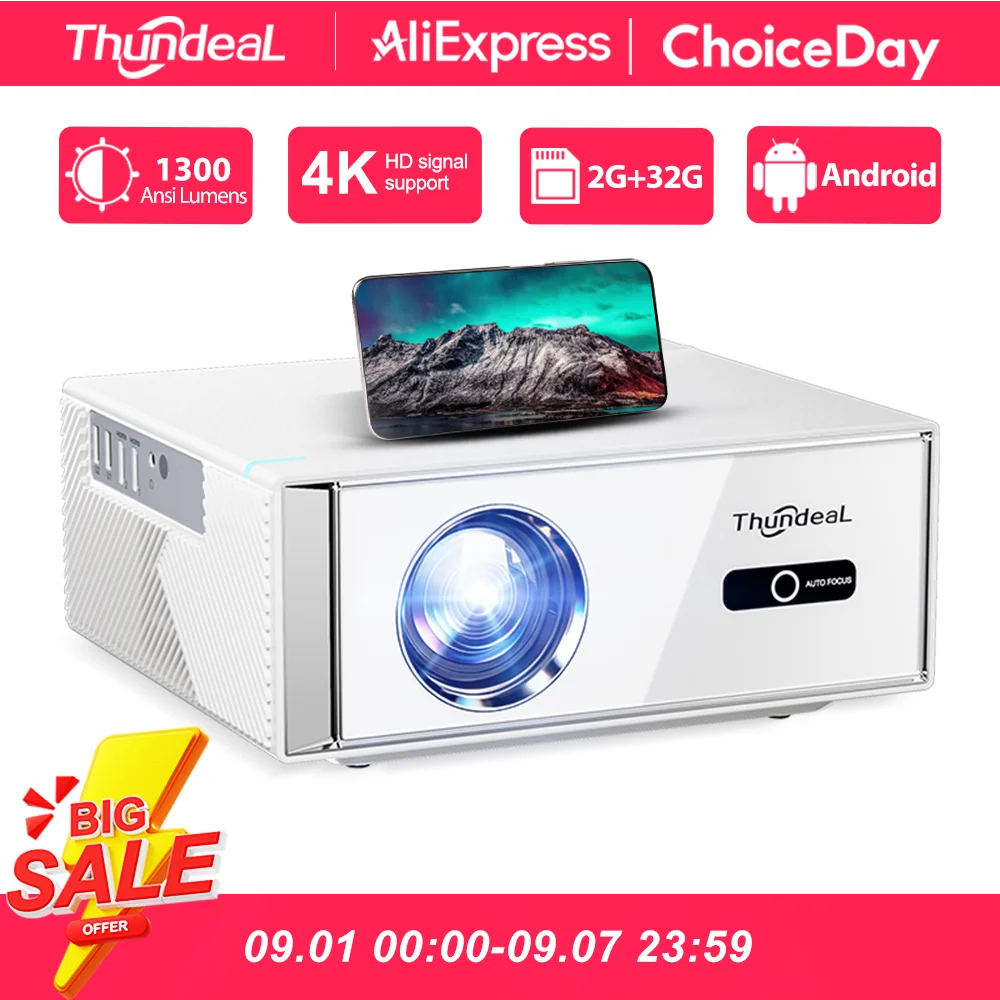
ThundeaL TD95W Android Projector Full HD 1080P WiFi 2K 4K Home Cinema Portable Smart TV Vi
$152.01 $248.75 on AliExpress
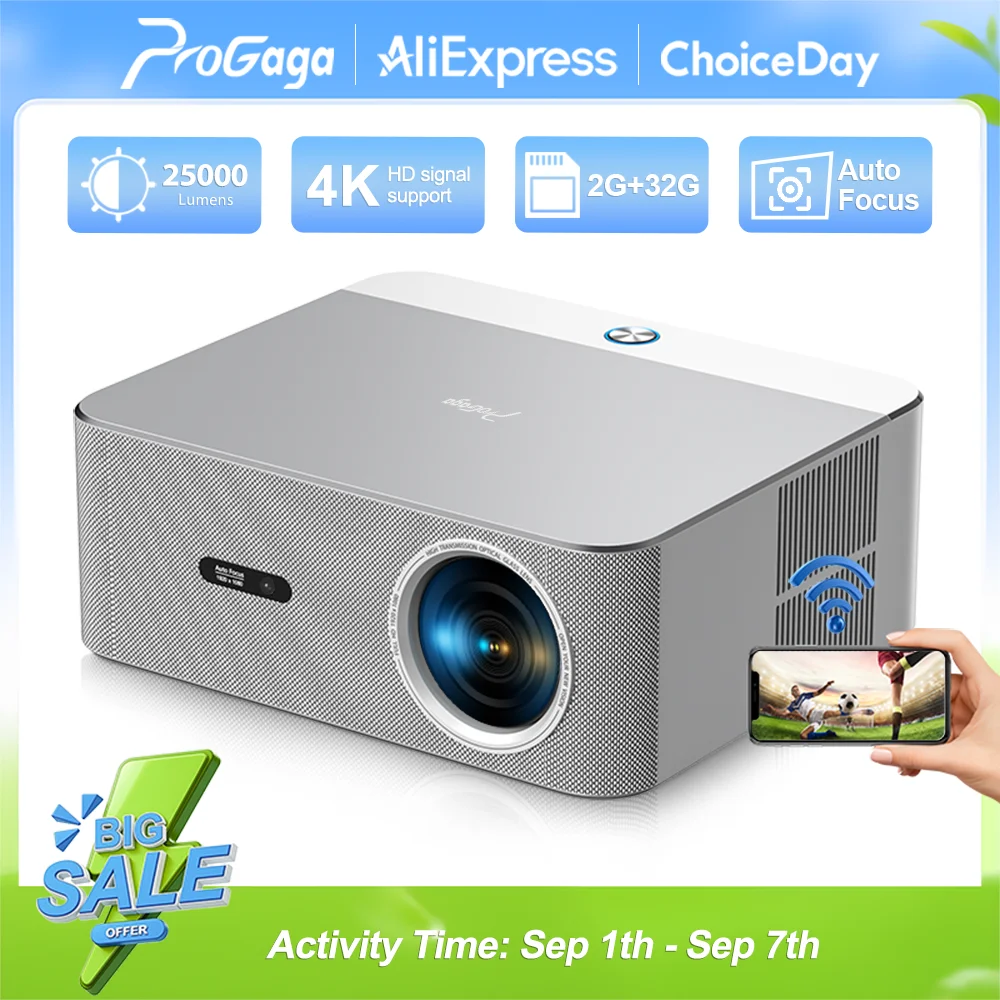
PROGAGA PG610W Full HD 1080P Projector Android 4K WiFi 2G 32G PG610W Beamer Home Theater M
$222.24 $396.85 on AliExpress
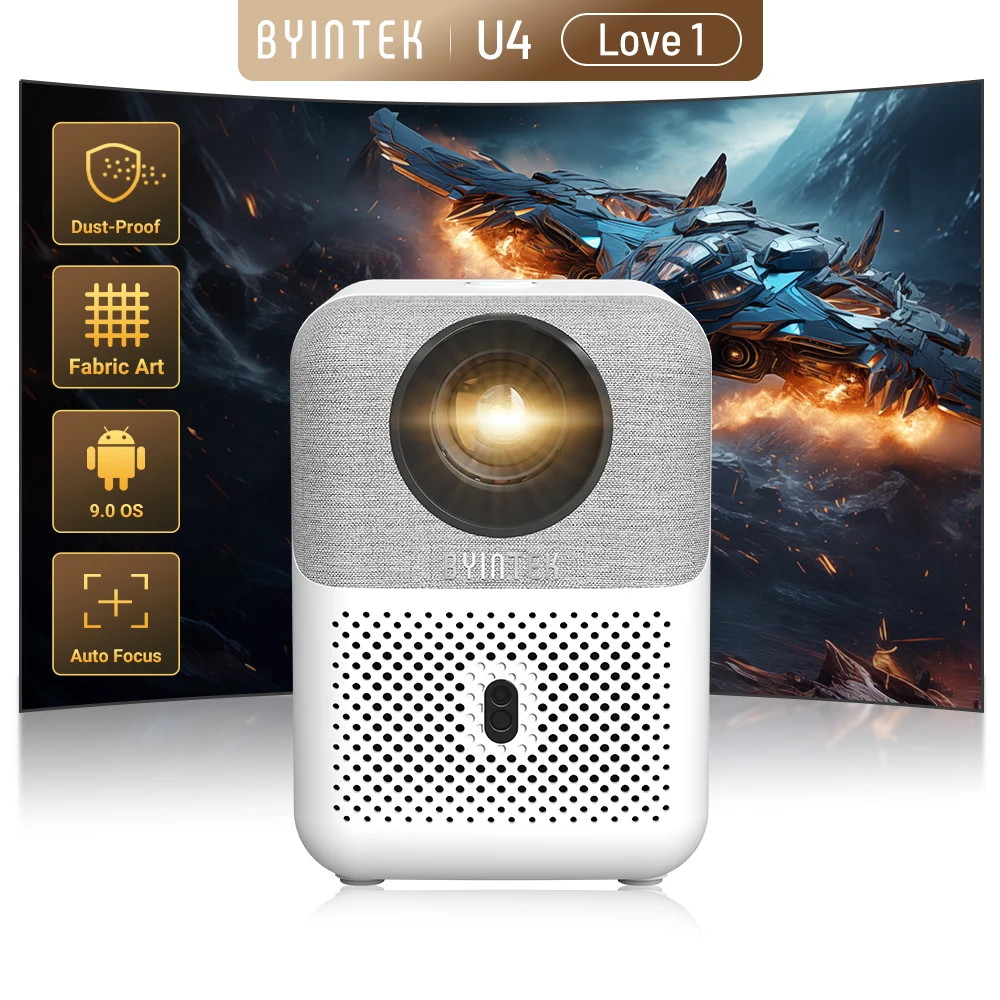
BYINTEK U4 LOVE 1 Projector 4K Smart 1080P Mini Home Theater Video Android WIFI for Smart
$130.90 $290.89 on AliExpress
Verdict: Which One Should You Buy?
When weighing a projector vs tv purchase, the winning choice depends fundamentally on your room’s physical environment and your personal entertainment priorities:
- Choose a Projector if: You want a genuine cinematic experience that exceeds 100 inches, have a dedicated room or controllable lighting, and intend to use the space predominantly for movies, prestige television, and cinematic gaming.
- Choose an OLED TV if: Your display lives in a brightly lit, multi-purpose living room, you demand pitch-black HDR contrast, or high-frame-rate console and PC gaming is central to your daily routine.
Frequently Asked Questions
Do I need a special screen for an ultra-short-throw projector?
While an ultra-short-throw projector can physically display an image against a flat white wall, doing so severely limits performance. Because UST projectors cast light upward at an extreme angle, standard walls highlight drywall imperfections and scatter light toward the ceiling. Investing in an Ambient Light Rejecting (ALR) or Ceiling Light Rejecting (CLR) serriform screen directs light straight toward your eyes and blocks overhead ambient light, significantly improving contrast and perceived black levels.
Can a projector replace an everyday living room TV?
Yes, modern high-brightness laser projectors like the Formovie Theater or Hisense UST line can function as daily television replacements if paired with an ALR screen. However, you must accept slight color washing during bright midday sun, modest fan noise, and higher electrical draw compared to a modern LED or OLED TV.
How long do projector bulbs and laser engines last?
Traditional metal-halide lamp projectors require bulb replacements every 3,000 to 5,000 hours. Modern solid-state laser projectors, however, are rated for 20,000 to 25,000 operational hours according to manufacturer reliability data. At four hours of daily use, a laser projector engine can reliably perform for over 15 years without needing maintenance.
Conclusion
The contemporary projector vs tv debate is no longer a question of clarity, as pixel-shifted 4K laser projections and native 4K OLED panels both resolve remarkable detail. The decision comes down to immersion versus environmental flexibility: whether you prioritize the overwhelming 120-inch scale of a commercial theater or the unflinching, zero-black-level perfection of an OLED. Once you finalize your display hardware, check out our NAS vs. Server: Which Should You Buy for Your Home or Small Business? to ensure your soundstage matches the grandeur of your screen.