As an Amazon Associate and an AliExpress affiliate, TechGurl earns from qualifying purchases. Some links on this page are affiliate links — if you buy through them we may receive a commission, at no extra cost to you. This never affects which products we cover or what we say about them.
Disclosure: This article contains affiliate links. If you buy through them we may earn a small commission at no extra cost to you.

Choosing between a ring doorbell vs nest model is the single most common dilemma homeowners face when upgrading their front porch security. Both brands dominate the smart video doorbell landscape, yet they take fundamentally different approaches to camera aspect ratios, on-device intelligence, ongoing subscription pricing, and smart home integration.
Amazon’s Ring lineup offers an extensive selection ranging from budget-friendly wired units to feature-packed dual-band models. In contrast, Google’s Nest focuses on refined aesthetic hardware, sophisticated on-device machine learning, and clean integration into the Google Home app ecosystem. To help you determine which brand deserves a permanent spot next to your front door, we analyzed their core specifications, real-world feature sets, and long-term ownership costs based on verified manufacturer data and independent expert testing.
Ring Doorbell vs Nest: Feature and Hardware Comparison
To provide a clear baseline, we compared the leading battery-powered offerings from each manufacturer: the Ring Battery Doorbell Plus and the Google Nest Doorbell (Battery). These two units represent the most popular models for renters and homeowners seeking versatile, drill-and-mount security.
| Feature / Specification | Ring Battery Doorbell Plus | Google Nest Doorbell (Battery) |
|---|---|---|
| Video Resolution | 1536 x 1536 HD (Square 1:1) | 960 x 1280 HD (Vertical 3:4) |
| Field of View | 150° Horizontal, 150° Vertical | 145° Diagonal (Vertical View) |
| Night Vision | Color Night Vision | Infrared Night Vision (4 IR LEDs) |
| Power Options | Removable Quick-Release Battery or Hardwired | Built-in Rechargeable Battery or Hardwired |
| Free Video Storage | None (Live view & real-time alerts only) | 3 hours of rolling event-based video history |
| Local Offline Storage | None (Cloud only via subscription) | Up to 1 hour local backup during Wi-Fi outages |
| On-Device AI Detection | Basic motion zones free; Smart Alerts require sub | Free on-device Person, Package, Animal, & Vehicle detection |
| Smart Ecosystem Support | Amazon Alexa, SmartThings | Google Home, Google Assistant |
| Base Cloud Subscription | Ring Basic: $4.99/mo or $49.99/yr per device | Nest Aware: $8/mo or $80/yr (covers all home devices) |
Head-to-Head Video Quality and Field of View
Video clarity and viewing angles are paramount for any front door camera. According to published technical data, the Ring Battery Doorbell Plus delivers a crisp 1536 x 1536 square resolution, providing what Ring calls ‘Head-to-Toe’ visibility with an expansive 150-degree horizontal and vertical perspective. This square aspect ratio ensures you can see both a visitor’s face and a package placed directly at the foot of your door.
Google takes a slightly different approach. In Google Nest’s official technical specifications, the Nest Doorbell (Battery) uses a 960 x 1280 resolution with a tall 3:4 aspect ratio and HDR processing. While its raw pixel count is lower than Ring’s, Google compensates with superior software image processing. In reviews conducted by Tom’s Guide and Wirecutter, Nest’s HDR imaging proved remarkably adept at balancing harsh backlighting when the sun shines directly behind a visitor, preventing silhouetting.
For nighttime recording, Ring provides color night vision when sufficient ambient porch lighting is available, while Nest relies on clean, high-contrast monochrome infrared illumination via 850 nm LEDs with an IR cut filter.
Smart Detection and Free Features Without a Subscription
One of the sharpest contrasts in the ring doorbell vs nest comparison comes down to what each camera can do out of the box without a paid monthly subscription.
Google holds a decisive advantage in free functionality. The Nest Doorbell (Battery) includes on-device machine learning processing, allowing it to differentiate between people, animals, vehicles, and packages natively. Furthermore, Google provides up to three hours of rolling event video clips at no extra charge. If your internet connection drops, the Nest camera can store up to one hour of recorded events in onboard flash memory, uploading them to the cloud once connectivity restores.
By contrast, Ring locks virtually all clip recording behind its Ring Protect subscription. Without a paid plan, a Ring doorbell only delivers real-time chime notifications and live streaming. You cannot view recorded clips of past events, nor can you access advanced package detection alerts. If you refuse to pay an ongoing monthly fee, Google Nest is clearly the more capable standalone device.
Subscription Pricing and Long-Term Value
If you plan to subscribe for complete cloud video history, both platforms offer competitive tiers, but the math changes depending on how many cameras you own:
- Single Camera Setups: Ring Protect Basic costs $4.99 per month (or $49.99 per year) per device, providing 180 days of video history and rich notification snapshots. This makes Ring slightly cheaper for households that only ever want a single video doorbell.
- Whole-Home Multi-Camera Setups: Google’s Nest Aware plan costs $8.00 per month (or $80.00 per year) and covers an unlimited number of Google Nest cameras, smart displays, and doorbells in a single home with 30 days of event video history. Ring’s equivalent whole-home plan (Ring Protect Plus) costs $10.00 per month ($100.00 per year).
- Continuous 24/7 Recording: For users who want non-stop continuous recording rather than clip-based triggers, Nest offers Nest Aware Plus ($15.00/mo or $150.00/yr), which delivers 10 days of continuous 24/7 video history—though this feature requires a wired Nest model. Ring does not offer continuous 24/7 recording on its standard consumer doorbell lineup.
Smart Home Ecosystem Compatibility
Your existing smart home hardware will likely decide this match for you. Ring is an Amazon subsidiary, meaning its products seamlessly tie into the Amazon Alexa ecosystem. A Ring doorbell can automatically display live video feeds on Echo Show smart displays, trigger custom Alexa routines, and chime across Echo Dot speakers throughout your home.
Google Nest doorbells are deeply woven into Google Home. When someone presses the button, Nest Hub displays can automatically bring up a full-screen feed and announce familiar faces if you enable facial recognition via Nest Aware. While third-party workarounds exist, cross-ecosystem integration is poor: Ring does not work natively on Nest Hubs, and Nest does not broadcast video to Echo devices.
Battery Swapping and Installation Mechanics
If you choose a wireless configuration, maintenance convenience matters. Ring uses a patented quick-release battery pack. To recharge, you simply remove the security faceplate, release the battery pack, and plug it into a standard Micro-USB or USB-C cable (depending on the battery version), leaving the mounting bracket and doorbell housing securely fastened to your wall. Many users keep a second charged battery on hand to eliminate camera downtime.
The Google Nest Doorbell (Battery) features an integrated, non-removable battery. To recharge it, you must use a release pin to unclip the entire doorbell unit from the wall mounting bracket and bring the whole device inside to plug into a USB-C charger for roughly 4 to 5 hours.
Top Recommended Doorbell Picks
1. Ring Battery Doorbell Plus
The Ring Battery Doorbell Plus is the premier option for Amazon Alexa households and anyone who prioritizes package surveillance. Its 1536p square aspect ratio ensures you can monitor packages right against the doormat, while the quick-release battery architecture makes recharging effortless without taking the entire housing off your wall.
With color night vision, customizable privacy zones, and responsive motion alerts, it delivers dependable perimeter security backed by Ring’s expansive Neighborhood network.
Ring Battery Doorbell Plus — check today’s price
2. Google Nest Doorbell (Battery)
The Google Nest Doorbell (Battery) is the best choice for users who want intelligent features without being forced into an immediate subscription. Its built-in AI detects people, animals, and packages natively, backed by 3 hours of free event video history and local fallback storage during Wi-Fi dropouts.
Its sleek Scandinavian styling, subtle status LED, and flawless integration with Google Nest Hub displays make it the benchmark video doorbell for Google Home enthusiasts.
Google Nest Doorbell (Battery) — check today’s price
Related picks on AliExpress
If you are looking for cost-effective video doorbells with local SD card recording and wide compatibility on a budget, consider these capable alternatives:

Wireless Intercom Doorbell Night Vision HD 4.3in LPS Screen Video Doorbell Camera Smart Ho
$49.70 $141.99 on AliExpress
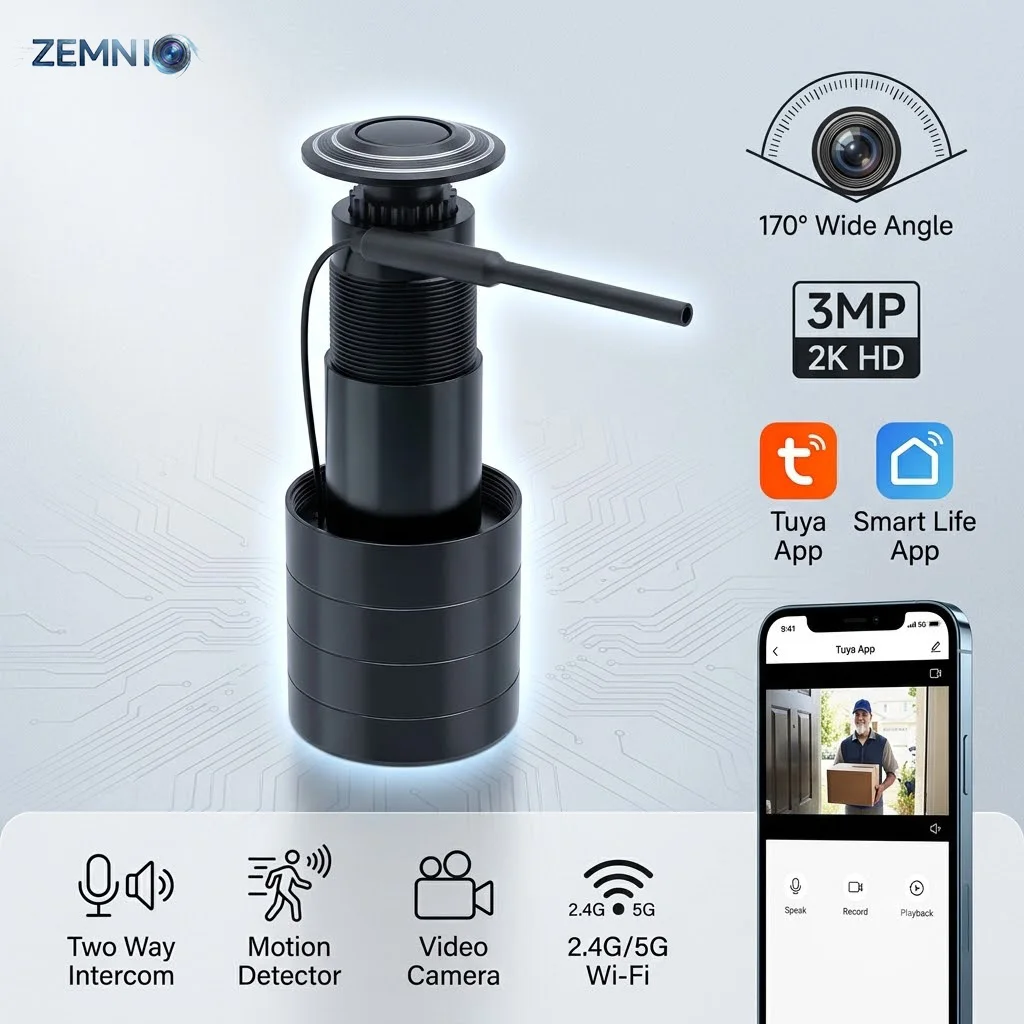
Smart Video Doorbell 3MP 2K HD 170° Wide Angle, Two-Way Audio Motion Detector, Tuya SmartL
$40.43 $80.87 on AliExpress
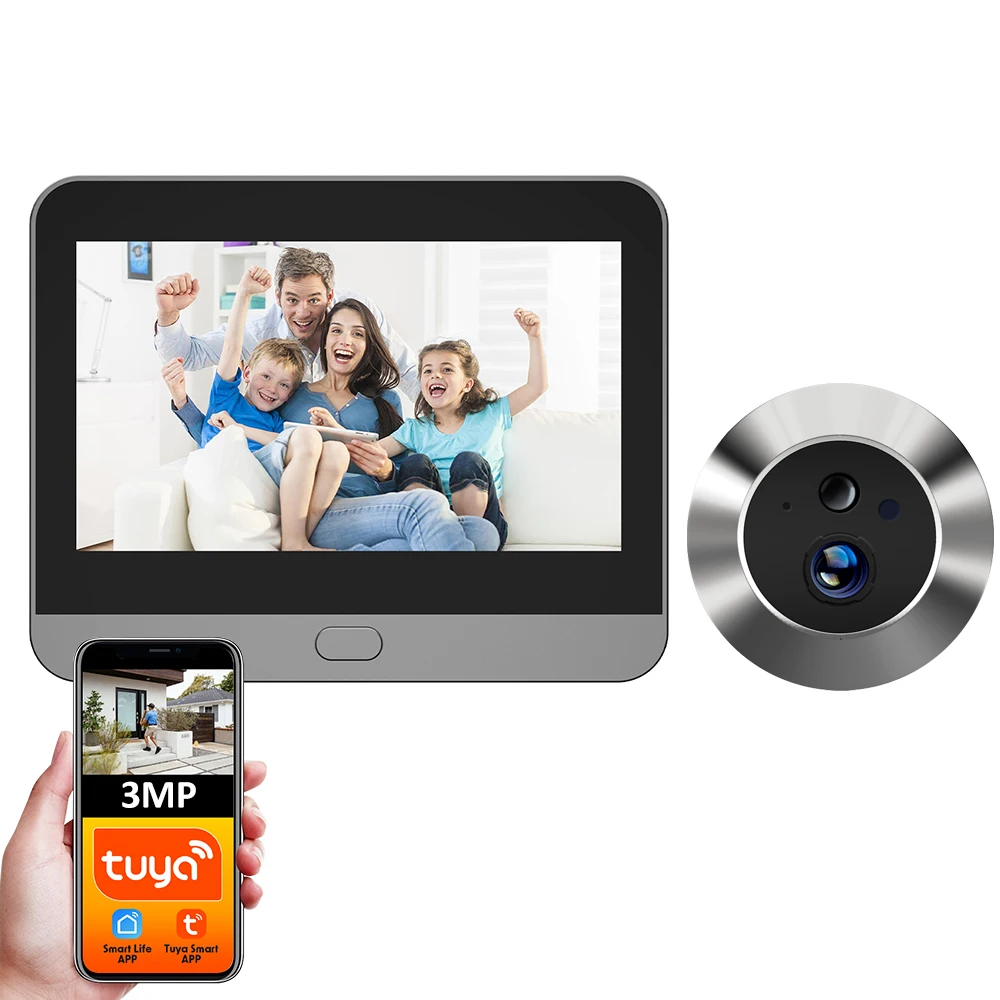
Tuya Smart 3MP 140° Wide View Angle Mini Digital Peephole Eye Viewer WiFi IR PIR Detection
$54.66 $175.45 on AliExpress
Frequently Asked Questions
Can I use a Ring or Nest doorbell without paying a monthly fee?
Yes, but the experience differs significantly. The Google Nest Doorbell includes 3 hours of rolling event-based video clip history and AI smart alerts (people, packages, animals) for free. Ring offers live streaming and real-time motion alerts out of the box, but you cannot record, save, or review any past video clips without an active Ring Protect subscription.
Which doorbell handles cold weather better?
Both lithium-ion battery doorbells experience reduced battery life in freezing temperatures. According to Google’s official support documentation, the Nest Doorbell (Battery) cannot charge below 32°F (0°C) even when hardwired; it will operate down to -4°F (-20°C) strictly on battery reserves until temperatures warm. Ring battery models exhibit similar cold-weather behavior, though being able to swap in a warm, freshly charged spare battery indoors makes Ring easier to maintain during harsh winters.
Can I connect a Ring doorbell to a Google Nest Hub or vice versa?
Cross-compatibility between these rival ecosystems is severely limited. While you can connect Ring to Google Home via basic skills for notifications, you cannot stream live video directly to a Nest Hub screen. Similarly, Nest doorbells cannot stream live video to Amazon Echo Show devices. For the best experience, match Ring with Alexa and Nest with Google Assistant.
Final Verdict
When evaluating ring doorbell vs nest, there is no single universal champion—the right answer depends on your existing smart ecosystem and your tolerance for monthly subscription fees. If you have Echo smart speakers and want maximum visual coverage of your doorstep with effortless battery swapping, the Ring Battery Doorbell Plus is your top pick. If you prefer Google Assistant, value built-in AI alerts, and want free event recording without an mandatory monthly bill, the Google Nest Doorbell is the superior investment.
For more home security guides and in-depth hardware evaluations, explore our Gaming Handheld vs. Laptop: Which Should You Buy for Portable Power? testing library to build a smarter, safer home.